Impulse

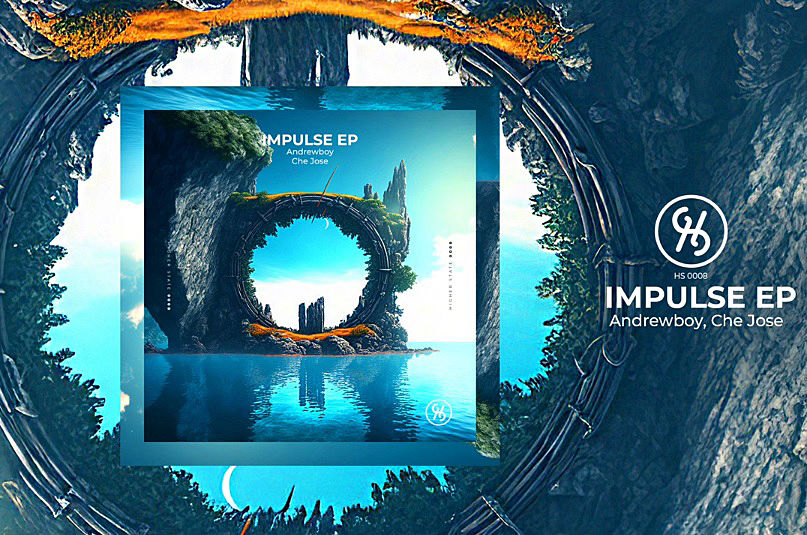
When listening to an electronic dance music (EDM) DJ set by Che Jose, I heard him spin his own track “Impulse” (2025) in collaboration with Andrewboy. I then thought of a psychoeducational lesson on Rational Emotive Behavior Therapy (REBT).
For context, the American Psychological Association (APA) defines impulse as “a sudden and compelling urge to act, often resulting in action without deliberation,” also called impulsion, and “the expression of psychic energy from instinctual drives, such as sex and hunger.”
When providing lessons on REBT, I encourage people to consider that impulse isn’t always aligned with thoughts or beliefs which are rational (in accordance with both logic and reason). For clarity, regarding this teaching, thoughts are descriptive and beliefs are prescriptive.
As an example, consider a modus ponens syllogism (if p, then q; p; therefore, q). If I want pizza (p), then I may go to a pizzeria (q). I want pizza (p). Therefore, I may go to a pizzeria (q). This logical and flexible proposition represents a descriptive thought indicating a desire.
Alternatively, if I demand pizza (p), then I absolutely must have it (q). I demand pizza (p). Therefore, I absolutely must have it (q). This logical and rigid proposition represents a prescriptive belief indicating that a demanded thing is a necessary one.
While both propositions adhere to logical form (i.e., modus ponens syllogistic format) I argue that the thought-based desire is flexibly reasonable while the belief-based demand is inflexibly unreasonable. Thus, the former is rational while the latter is irrational.
Specifically, simply because one demands pizza doesn’t mean that pizza is a necessity. Nevertheless, impulse may begin with a descriptive thought while thereafter transitioning into a prescriptive belief that drives behavior. Yet, not all consequences of impulse are unhealthy.
Noteworthy, the APA defines impulsive as “describing or displaying behavior characterized by little or no forethought, reflection, or consideration of the consequences of an action, particularly one that involves taking risks.” To illustrate this point, I ask you to forgive me an anecdote.
When I served as military police (MP) in Okinawa, Japan (1997-1999), an MP friend of mine responded to a suicide attempt at the Kinser towers (on-base military family housing). If memory serves, someone climbed over the chain-link fence at the top of a nine-story housing tower.
Impulsively, my fellow MP maneuvered up and over the fence to stabilize the potential jumper’s position. This was a risky move that placed my colleague’s life in grave danger so that he could protect the life of the would-be lawn dart (forgive my use of gallows humor).
Saving a life that day, my fellow MP wasn’t formally rewarded for his impulsive act of bravery. His actions were said to have constituted a “routine” course of duty. (Bullshit!) I didn’t know many other United States Marines who would’ve placed their lives in danger, as did my buddy.
Still, this doesn’t mean that Marines didn’t have an impulsive character, which the APA defines as “a personality pattern marked by a tendency to act hastily and without adequate reflection on the possible consequences.” After all, Marines were called Uncle Sam’s Misguided Children.
When I served (1996-2007), I didn’t know many enlisted Marines of similar age who didn’t have issues with impulse control, which the APA defines as “the ability to resist an impulse, desire, or temptation and to regulate its translation into action” (e.g., excessive spending or drinking).
Still, impulsive traits alone don’t constitute impulse-control disorder, which the APA defines as “a disorder characterized by a failure to resist impulses, drives, or temptations to commit acts that are harmful to oneself or to others” (i.e., a group of symptoms, not merely a single trait).
At any rate, the takeaway for this blogpost, as influenced by the EDM song “Impulse”, is that descriptive thoughts may transition to prescriptive beliefs which then result in impulsive behavior. Sometimes the consequences of this process are helpful, and sometimes they aren’t.
If you’re looking for a provider who tries to work to help you understand how thinking impacts physical, mental, emotional, and behavioral elements of your life, I invite you to reach out today by using the contact widget on my website.
As the world’s foremost EDM-influenced REBT psychotherapist—promoting content related to EDM, I’m pleased to try to help people with an assortment of issues from anger (hostility, rage, and aggression) to relational issues, adjustment matters, trauma experience, justice involvement, attention-deficit hyperactivity disorder, anxiety and depression, and other mood or personality-related matters.
At Hollings Therapy, LLC, serving all of Texas, I aim to treat clients with dignity and respect while offering a multi-lensed approach to the practice of psychotherapy and life coaching. My mission includes: Prioritizing the cognitive and emotive needs of clients, an overall reduction in client suffering, and supporting sustainable growth for the clients I serve. Rather than simply trying to help you to feel better, I want to try to help you get better!
Deric Hollings, LPC, LCSW
References:
Andrewboy. (2025, May 21). Andrewboy, & Che Jose – Impulse [Image; video]. YouTube. Retrieved from https://youtu.be/cgVSOduqghY?si=-YkE9yJUesqQlgAa
APA Dictionary of Psychology. (2018, April 19). Disorder. American Psychological Association. Retrieved from https://dictionary.apa.org/disorder
APA Dictionary of Psychology. (2018, April 19). Impulse. American Psychological Association. Retrieved from https://dictionary.apa.org/impulse
APA Dictionary of Psychology. (2018, April 19). Impulse control. American Psychological Association. Retrieved from https://dictionary.apa.org/impulse-control
APA Dictionary of Psychology. (2018, April 19). Impulse-control disorder. American Psychological Association. Retrieved from https://dictionary.apa.org/impulse-control-disorder
APA Dictionary of Psychology. (2018, April 19). Impulsive. American Psychological Association. Retrieved from https://dictionary.apa.org/impulsive
APA Dictionary of Psychology. (2018, April 19). Impulsive character. American Psychological Association. Retrieved from https://dictionary.apa.org/impulsive-character
APA Dictionary of Psychology. (2018, April 19). Instinct. American Psychological Association. Retrieved from https://dictionary.apa.org/instinct
APA Dictionary of Psychology. (2018, April 19). Psychic energy. American Psychological Association. Retrieved from https://dictionary.apa.org/psychic-energy
APA Dictionary of Psychology. (2018, April 19). Trait. American Psychological Association. Retrieved from https://dictionary.apa.org/trait
Che Jose. (2025, August 24). Che Jose live at - Crave the Rave [Melodic techno, progressive DJ mix] [Video]. YouTube. Retrieved from https://youtu.be/HjNM0Qjf0nI?si=SFQIr6tgWYneoljz
Gonzalez, S. (n.d.). On-base housing, Camp Kinser: Kinser towers. Okinawa Hai. Retrieved from https://okinawahai.com/kinser-towers/
Hollings, D. (2025, March 2). A demanded thing is a necessary one. Hollings Therapy, LLC. Retrieved from https://www.hollingstherapy.com/post/a-demanded-thing-is-a-necessary-one
Hollings, D. (2024, July 9). Absolutistic should beliefs. Hollings Therapy, LLC. Retrieved from https://www.hollingstherapy.com/post/absolutistic-should-beliefs
Hollings, D. (2026, February 8). Adaptive and maladaptive emotions and behavior. Hollings Therapy, LLC. Retrieved from https://www.hollingstherapy.com/post/adaptive-and-maladaptive-emotions-and-behavior
Hollings, D. (2025, September 13). Are your actions ruled by reason? Hollings Therapy, LLC. Retrieved from https://www.hollingstherapy.com/post/are-your-actions-ruled-by-reason
Hollings, D. (2024, November 24). Automatic thoughts and beliefs. Hollings Therapy, LLC. Retrieved from https://www.hollingstherapy.com/post/automatic-thoughts-and-beliefs
Hollings, D. (2024, March 19). Consequences. Hollings Therapy, LLC. Retrieved from https://www.hollingstherapy.com/post/consequences
Hollings, D. (2023, April 22). Control. Hollings Therapy, LLC. Retrieved from https://www.hollingstherapy.com/post/control
Hollings, D. (2026, January 18). Cultivating character… right now. Hollings Therapy, LLC. Retrieved from https://www.hollingstherapy.com/post/cultivating-character-right-now
Hollings, D. (2022, October 31). Demandingness. Hollings Therapy, LLC. Retrieved from https://www.hollingstherapy.com/post/demandingness
Hollings, D. (2022, October 5). Description vs. prescription. Hollings Therapy, LLC. Retrieved from https://www.hollingstherapy.com/post/description-vs-prescription
Hollings, D. (2022, March 15). Disclaimer. Hollings Therapy, LLC. Retrieved from https://www.hollingstherapy.com/post/disclaimer
Hollings, D. (2026, April 25). Embarrassment attacking: Risk-taking exercises. Hollings Therapy, LLC. Retrieved from https://www.hollingstherapy.com/post/embarrassment-attacking-risk-taking-exercises
Hollings, D. (2023, September 8). Fair use. Hollings Therapy, LLC. Retrieved from https://www.hollingstherapy.com/post/fair-use
Hollings, D. (2024, May 17). Feeling better vs. getting better. Hollings Therapy, LLC. Retrieved from https://www.hollingstherapy.com/post/feeling-better-vs-getting-better-1
Hollings, D. (2026, January 29). Gallows humor: Nihilist penguin. Hollings Therapy, LLC. Retrieved from https://www.hollingstherapy.com/post/gallows-humor-nihilist-penguin
Hollings, D. (2023, October 12). Get better. Hollings Therapy, LLC. Retrieved from https://www.hollingstherapy.com/post/get-better
Hollings, D. (n.d.). Hollings Therapy, LLC [Official website]. Hollings Therapy, LLC. Retrieved from https://www.hollingstherapy.com/
Hollings, D. (2026, February 8). Is It Desire, or Is It Love? Hollings Therapy, LLC. Retrieved from https://www.hollingstherapy.com/post/is-it-desire-or-is-it-love
Hollings, D. (2022, August 31). Iss-me vs. iss-you. Hollings Therapy, LLC. Retrieved from https://www.hollingstherapy.com/post/iss-me-vs-iss-you
Hollings, D. (2023, September 19). Life coaching. Hollings Therapy, LLC. Retrieved from https://www.hollingstherapy.com/post/life-coaching
Hollings, D. (2023, January 8). Logic and reason. Hollings Therapy, LLC. Retrieved from https://www.hollingstherapy.com/post/logic-and-reason
Hollings, D. (2025, March 16). Modus ponens. Hollings Therapy, LLC. Retrieved from https://www.hollingstherapy.com/post/modus-ponens
Hollings, D. (2023, September 20). No B.S. Hollings Therapy, LLC. Retrieved from https://www.hollingstherapy.com/post/no-b-s
Hollings, D. (2025, April 9). Perception, action, and will. Hollings Therapy, LLC. Retrieved from https://www.hollingstherapy.com/post/perception-action-and-will
Hollings, D. (2024, January 1). Psychoeducation. Hollings Therapy, LLC. Retrieved from https://www.hollingstherapy.com/post/psychoeducation
Hollings, D. (2024, May 5). Psychotherapist. Hollings Therapy, LLC. Retrieved from https://www.hollingstherapy.com/post/psychotherapist
Hollings, D. (2022, March 24). Rational emotive behavior therapy (REBT). Hollings Therapy, LLC. Retrieved from https://www.hollingstherapy.com/post/rational-emotive-behavior-therapy-rebt
Hollings, D. (2025, August 13). Rational versus irrational thoughts and beliefs. Hollings Therapy, LLC. Retrieved from https://www.hollingstherapy.com/post/rational-versus-irrational-thoughts-and-beliefs
Hollings, D. (2024, July 18). REBT flexibility. Hollings Therapy, LLC. Retrieved from https://www.hollingstherapy.com/post/rebt-flexibility
Hollings, D. (2024, January 4). Rigid vs. rigorous. Hollings Therapy, LLC. Retrieved from https://www.hollingstherapy.com/post/rigid-vs-rigorous
Hollings, D. (2025, October 27). Suicide and suicide attempts: Jumping out the window. Hollings Therapy, LLC. Retrieved from https://www.hollingstherapy.com/post/suicide-and-suicide-attempts-jumping-out-the-window
Hollings, D. (2024, January 12). The reflection process. Hollings Therapy, LLC. Retrieved from https://www.hollingstherapy.com/post/ the-reflection-process
Hollings, D. (2025, February 28). To try is my goal. Hollings Therapy, LLC. Retrieved from https://www.hollingstherapy.com/post/to-try-is-my-goal
Hollings, D. (2026, March 27). Uncle Sam’s misguided children: Forced and unforced errors. Hollings Therapy, LLC. Retrieved from https://www.hollingstherapy.com/post/uncle-sam-s-misguided-children-forced-and-unforced-errors
Hollings, D. (2023, May 3). Want vs. need. Hollings Therapy, LLC. Retrieved from https://www.hollingstherapy.com/post/want-vs-need
Hollings, D. (2026, February 12). When are beliefs rational or healthy? Hollings Therapy, LLC. Retrieved from https://www.hollingstherapy.com/post/when-are-beliefs-rational-or-healthy
Soundcloud. (n.d.). Andrewboy Muzik. Retrieved from https://soundcloud.com/andrewboymuzik-1
Soundcloud. (n.d.). Che Jose. Retrieved from https://soundcloud.com/chejose
Wikipedia. (n.d.). Lawn darts. Retrieved from https://en.wikipedia.org/wiki/Lawn_darts
Wikipedia. (n.d.). Military police. Retrieved from https://en.wikipedia.org/wiki/Military_police
Wikipedia. (n.d.). United States Marine Corps. Retrieved from https://en.wikipedia.org/wiki/United_States_Marine_Corps


