Common Sense: Does the Proposition Use Sound Judgment?

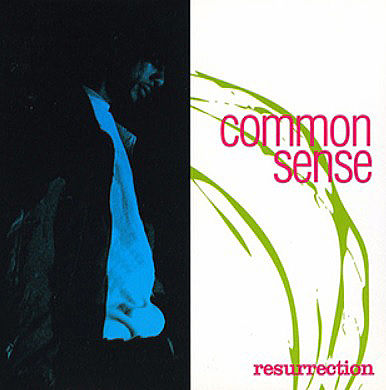
On his second studio album Resurrection (1994), by lyricist Common (formerly “Common Sense”), was the classic track “I Used to Love H.E.R.” which was produced by No I.D. and that sampled “The Changing World” (1974) by George Benson. It’s my favorite song by Common.
In particular, the song serves as a metaphor for hip hop, using imagery of a woman in whom the lyricist is in love and who eventually transitions to someone he no longer recognizes when she opts for a more gangsta aesthetic. Regarding the video for the track, one source states:
The music video was filmed on September 20, 1994 and directed by Chris Halliburton. It shows clips of Common’s home of Southside Chicago and a woman, who is the main subject of the video because of the extended metaphor. It shows how she “became a gangster” when this woman is seen with two other gangster-looking women in allusion to the rise of gangsta rap.
Personally, the song divides lyricists and rappers. A lyricist raps while concentrating on the art of storytelling, devotes attention to written lyrics, experiments with wordplay, emphasizes poetic depth, often uses complex rhyme schemes, and also utilizes a unique ability to deliver lyrics.
While every hip hop lyricist is a rapper of sorts, not every rapper is a lyricist. Truly, the rapper-lyricist distinction is subjective. Admittedly, though I’ve been involved in the hip hop subculture for over four decades, I still go back and forth with consideration of who qualifies as a lyricist.
Gangsta rappers aren’t considered lyricists, though there are exceptions to this general rule (e.g., lyricists MC Ren, Ice Cube, and the D.O.C. of N.W.A). If you’re unfamiliar with the finer points of hip hop, as a subculture and history, then this distinction may not serve as common sense.
According to the American Psychological Association (APA), common sense is defined as “beliefs or propositions that are generally agreed upon to reflect sound judgment and nonesoteric reasoning.” Additionally, the APA thusly defines a proposition:
1. in philosophy, anything that can be asserted or denied and that is capable of being either true or false; that is, the content of a typical declarative sentence, such as Grass is green or Lenin was a great man.
2. in linguistics, a formal statement representing the underlying meaning of a sentence or sentence component, irrespective of its form. For example, the sentences I scored the goal and The goal was scored by me represent the same proposition, as would a translation of either sentence into a different language. —propositional adj.
Succinctly, one source adds, “Common sense (from Latin sensus communis) is “knowledge, judgement, and taste which is more or less universal and which is held more or less without reflection or argument.” Of “sound judgement,” mentioned by the APA, one source states:
Descartes’ writings reveal a consistent conception of philosophy’s goal. In the first rule of the unfinished Rules for the Direction of the Mind, he states: “The aim of our studies should be to direct the mind with a view to forming true and sound judgements about whatever comes before it” (AT X 359/CSM I 9).
The principal goal of philosophy is to cultivate one’s capacity for sound judgment, which Descartes identifies with “good sense” (le bons sens) and “universal wisdom.” This goal should be pursued for its own sake, since other ends may distract us from the course of inquiry.
Nevertheless, Descartes insists upon the practical benefits of the wisdom thereby achieved: one should consider “how to increase the natural light of his reason… in order that his intellect should show his will what decision it ought to make in each of life’s contingencies” (AT X 361/CSM I 10).
In this way, we can expect to realize the “legitimate fruits” of the sciences: “the comforts of life” and “the pleasure to be gained from contemplating the truth, which is practically the only happiness in this life that is complete and untroubled by pain” (ibid.).
Given the framework outlined thus far, perhaps you care little about the difference between lyricists and rappers. After all, I may consider it a common sense distinction between these two types of emcees, though you don’t have to pay this matter any attention. Very well!
Allow me to instead present a relatively brief psychoeducational lesson on Rational Emotive Behavior Therapy (REBT), about which you may be interested. It regards what is common sense to me, though you may not have awareness relating to this topic.
For the sake of argument, imagine I propose that if you don’t know as much about hip hop as I do, then you’re dumb and you have no worth. Does the proposition use sound judgment? Of course not! From an REBT outlook, my proposal uses a conclusion of global evaluation.
Specifically, by labeling you “dumb” and stating that you “have no worth,” I’ve evaluated and appraised your entire worth. For context, the APA thusly defines evaluation:
[A] careful examination or overall appraisal of something, particularly to determine its worth, value, or desirability. For example, the evaluation of a particular therapeutic technique refers to a determination of its success in achieving defined goals.
Similarly, the APA defines appraisal as “the cognitive evaluation of the nature and significance of a phenomenon or event.” In REBT, evaluations and appraisals are generally synonymous terms. Both refer to the core cognitive process of how individuals interpret and assign value.
Simply because you don’t know as much about hip hop as I do doesn’t mean that you’re dumb and that you have no worth. Even in “I Used to Love H.E.R.”, common didn’t express that hip hop—which transitioned to gangsta rap—was completely without value.
From a common sense view, given the brief lesson on global evaluation outlined herein, the proposition I’ve put forth doesn’t use sound judgment. In this imagined example, the proposal merely uses a subjective opinion. Now, that’s nothing upon which your worth is predicated.
If you’re looking for a provider who tries to work to help you understand how thinking impacts physical, mental, emotional, and behavioral elements of your life, I invite you to reach out today by using the contact widget on my website.
As the world’s foremost hip hop-influenced REBT psychotherapist, I’m pleased to try to help people with an assortment of issues from anger (hostility, rage, and aggression) to relational issues, adjustment matters, trauma experience, justice involvement, attention-deficit hyperactivity disorder, anxiety and depression, and other mood or personality-related matters.
At Hollings Therapy, LLC, serving all of Texas, I aim to treat clients with dignity and respect while offering a multi-lensed approach to the practice of psychotherapy and life coaching. My mission includes: Prioritizing the cognitive and emotive needs of clients, an overall reduction in client suffering, and supporting sustainable growth for the clients I serve. Rather than simply trying to help you to feel better, I want to try to help you get better!
Deric Hollings, LPC, LCSW
References:
APA Dictionary of Psychology. (2018, April 19). Appraisal. American Psychological Association. Retrieved from https://dictionary.apa.org/appraisal
APA Dictionary of Psychology. (2018, April 19). Awareness. American Psychological Association. Retrieved from https://dictionary.apa.org/awareness
APA Dictionary of Psychology. (2018, April 19). Common sense. American Psychological Association. Retrieved from https://dictionary.apa.org/common-sense
APA Dictionary of Psychology. (2018, April 19). Evaluation. American Psychological Association. Retrieved from https://dictionary.apa.org/evaluation
APA Dictionary of Psychology. (2023, November 15). Intellect. American Psychological Association. Retrieved from https://dictionary.apa.org/intellect
APA Dictionary of Psychology. (2018, April 19). Proposition. American Psychological Association. Retrieved from https://dictionary.apa.org/proposition
Benson, G. (2015, May 21). The Changing World [Video]. YouTube. Retrieve from https://youtu.be/FiSeub38_Oc?si=-qoJuxNjDktzTZPL
Common. (2018, January 29). Common - I Used to Love H.E.R. (Official video) [Video]. YouTube. Retrieved from https://youtu.be/TrUERC2Zk64?si=26gbRkYnB230jMX9
Hollings, D. (2026, June 16). A fountain of goodness: Subjective and objective views. Hollings Therapy, LLC. Retrieved from https://www.hollingstherapy.com/post/a-fountain-of-goodness-subjective-and-objective-views
Hollings, D. (2025, December 8). A gangsta condition, cuh. Hollings Therapy, LLC. Retrieved from https://www.hollingstherapy.com/post/a-gangsta-condition-cuh
Hollings, D. (2025, September 6). Bringing meaning to the words. Hollings Therapy, LLC. Retrieved from https://www.hollingstherapy.com/post/bringing-meaning-to-the-words
Hollings, D. (2026, June 14). Cognitive reappraisal and expressive suppression. Hollings Therapy, LLC. Retrieved from https://www.hollingstherapy.com/post/cognitive-reappraisal-and-expressive-suppression
Hollings, D. (2024, October 21). Desire. Hollings Therapy, LLC. Retrieved from https://www.hollingstherapy.com/post/desire
Hollings, D. (2022, March 15). Disclaimer. Hollings Therapy, LLC. Retrieved from https://www.hollingstherapy.com/post/disclaimer
Hollings, D. (2024, January 28). Does that make sense? Hollings Therapy, LLC. Retrieved from https://www.hollingstherapy.com/post/does-that-make-sense
Hollings, D. (2026, June 3). Dumb knowledge: Why would you choose to simp? Hollings Therapy, LLC. Retrieved from https://www.hollingstherapy.com/post/dumb-knowledge-why-would-you-choose-to-simp
Hollings, D. (2026, June 4). Expectations: I’ve been sorting through a lot of shit that’s in my head now. Hollings Therapy, LLC. Retrieved from https://www.hollingstherapy.com/post/expectations-i-ve-been-sorting-through-a-lot-of-shit-that-s-in-my-head-now
Hollings, D. (2023, September 8). Fair use. Hollings Therapy, LLC. Retrieved from https://www.hollingstherapy.com/post/fair-use
Hollings, D. (2024, May 17). Feeling better vs. getting better. Hollings Therapy, LLC. Retrieved from https://www.hollingstherapy.com/post/feeling-better-vs-getting-better-1
Hollings, D. (2023, October 12). Get better. Hollings Therapy, LLC. Retrieved from https://www.hollingstherapy.com/post/get-better
Hollings, D. (2023, September 13). Global evaluations. Hollings Therapy, LLC. Retrieved from https://www.hollingstherapy.com/post/global-evaluations
Hollings, D. (2024, April 13). Goals. Hollings Therapy, LLC. Retrieved from https://www.hollingstherapy.com/post/goals
Hollings, D. (2024, September 24). Happy place. Hollings Therapy, LLC. Retrieved from https://www.hollingstherapy.com/post/happy-place
Hollings, D. (2025, September 7). Have to. Hollings Therapy, LLC. Retrieved from https://www.hollingstherapy.com/post/have-to
Hollings, D. (2023, July 13). Holes in the proposal. Hollings Therapy, LLC. Retrieved from https://www.hollingstherapy.com/post/holes-in-the-proposal
Hollings, D. (n.d.). Hollings Therapy, LLC [Official website]. Hollings Therapy, LLC. Retrieved from https://www.hollingstherapy.com/
Hollings, D. (2026, June 12). Human nature: How you live makes a difference. Hollings Therapy, LLC. Retrieved from https://www.hollingstherapy.com/post/human-nature-how-you-live-makes-a-difference
Hollings, D. (2025, January 19). I felt worthless. Hollings Therapy, LLC. Retrieved from https://www.hollingstherapy.com/post/i-felt-worthless
Hollings, D. (2024, June 15). Innocente (falling in love). Hollings Therapy, LLC. Retrieved from https://www.hollingstherapy.com/post/innocente-falling-in-love
Hollings, D. (2024, January 2). Interests and goals. Hollings Therapy, LLC. Retrieved from https://www.hollingstherapy.com/post/interests-and-goals
Hollings, D. (2024, September 26). Interpreted reality. Hollings Therapy, LLC. Retrieved from https://www.hollingstherapy.com/post/interpreted-reality
Hollings, D. (2026, July 6). It’s not an opinion, it’s a fact: Am I taking crazy pills? Hollings Therapy, LLC. Retrieved from https://www.hollingstherapy.com/post/it-s-not-an-opinion-it-s-a-fact-am-i-taking-crazy-pills
Hollings, D. (2025, April 23). Judgment. Hollings Therapy, LLC. Retrieved from https://www.hollingstherapy.com/post/judgment
Hollings, D. (2025, October 13). Knowledge, wisdom, understanding. Hollings Therapy, LLC. Retrieved from https://www.hollingstherapy.com/post/knowledge-wisdom-understanding
Hollings, D. (2022, November 10). Labeling. Hollings Therapy, LLC. Retrieved from https://www.hollingstherapy.com/post/labeling
Hollings, D. (2023, September 19). Life coaching. Hollings Therapy, LLC. Retrieved from https://www.hollingstherapy.com/post/life-coaching
Hollings, D. (2023, January 8). Logic and reason. Hollings Therapy, LLC. Retrieved from https://www.hollingstherapy.com/post/logic-and-reason
Hollings, D. (2026, April 28). Metaphor: Life’s a dance. Hollings Therapy, LLC. Retrieved from https://www.hollingstherapy.com/post/metaphor-life-s-a-dance
Hollings, D. (2024, June 17). On free will. Hollings Therapy, LLC. Retrieved from https://www.hollingstherapy.com/post/on-free-will
Hollings, D. (2023, April 24). On truth. Hollings Therapy, LLC. Retrieved from https://www.hollingstherapy.com/post/on-truth
Hollings, D. (2026, July 9). Outlook: The more things change, the more they stay the same. Hollings Therapy, LLC. Retrieved from https://www.hollingstherapy.com/post/outlook-the-more-things-change-the-more-they-stay-the-same
Hollings, D. (2025, March 5). Pain. Hollings Therapy, LLC. Retrieved from https://www.hollingstherapy.com/post/pain
Hollings, D. (2026, June 15). Point of view. Hollings Therapy, LLC. Retrieved from https://www.hollingstherapy.com/post/point-of-view
Hollings, D. (2024, July 10). Preferential should beliefs. Hollings Therapy, LLC. Retrieved from https://www.hollingstherapy.com/post/preferential-should-beliefs
Hollings, D. (2024, January 1). Psychoeducation. Hollings Therapy, LLC. Retrieved from https://www.hollingstherapy.com/post/psychoeducation
Hollings, D. (2024, May 5). Psychotherapist. Hollings Therapy, LLC. Retrieved from https://www.hollingstherapy.com/post/psychotherapist
Hollings, D. (2022, March 24). Rational emotive behavior therapy (REBT). Hollings Therapy, LLC. Retrieved from https://www.hollingstherapy.com/post/rational-emotive-behavior-therapy-rebt
Hollings, D. (2024, December 5). Reasoning. Hollings Therapy, LLC. Retrieved from https://www.hollingstherapy.com/post/reasoning
Hollings, D. (2024, July 10). Recommendatory should beliefs. Hollings Therapy, LLC. Retrieved from https://www.hollingstherapy.com/post/recommendatory-should-beliefs
Hollings, D. (2026, March 5). Rules-based order: Rules will vary. Hollings Therapy, LLC. Retrieved from https://www.hollingstherapy.com/post/rules-based-order-rules-will-vary
Hollings, D. (2025, January 15). Satisfaction. Hollings Therapy, LLC. Retrieved from https://www.hollingstherapy.com/post/satisfaction
Hollings, D. (2025, October 9). Self-awareness, self-examination, and self-determination. Hollings Therapy, LLC. Retrieved from https://www.hollingstherapy.com/post/self-awareness-self-examination-and-self-determination
Hollings, D. (2024, May 26). Self-determination and autonomy. Hollings Therapy, LLC. Retrieved from https://www.hollingstherapy.com/post/self-determination-and-autonomy
Hollings, D. (2025, October 22). The construct. Hollings Therapy, LLC. Retrieved from https://www.hollingstherapy.com/post/the-construct
Hollings, D. (2023, August 6). The science. Hollings Therapy, LLC. Retrieved from https://www.hollingstherapy.com/post/the-science
Hollings, D. (2026, April 23). The three traditionally identified components of the mind: Affect, cognition, and conation. Hollings Therapy, LLC. Retrieved from https://www.hollingstherapy.com/post/the-three-traditionally-identified-components-of-the-mind-affect-cognition-and-conation
Hollings, D. (2025, November 9). The true measure of wisdom. Hollings Therapy, LLC. Retrieved from https://www.hollingstherapy.com/post/the-true-measure-of-wisdom
Hollings, D. (2025, September 9). The true worth of things. Hollings Therapy, LLC. Retrieved from https://www.hollingstherapy.com/post/the-true-worth-of-things
Hollings, D. (2025, February 28). To try is my goal. Hollings Therapy, LLC. Retrieved from https://www.hollingstherapy.com/post/to-try-is-my-goal
Hollings, D. (2025, February 9). Value. Hollings Therapy, LLC. Retrieved from https://www.hollingstherapy.com/post/value
Hollings, D. (2026, March 5). You oughta know by now. Hollings Therapy, LLC. Retrieved from https://www.hollingstherapy.com/post/you-oughta-know-by-now
IMDb. (n.d.). Chris Halliburton. Retrieved from https://www.imdb.com/name/nm13782030/
Rutherford, D. (2008, December 1). Descartes’ ethics. Stanford Encyclopedia of Philosophy. Retrieved from https://plato.stanford.edu/archives/sum2009/entries/descartes-ethics/
Wikipedia. (n.d.). Common (rapper). Retrieved from https://en.wikipedia.org/wiki/Common_(rapper)
Wikipedia. (n.d.). Common sense. Retrieved from https://en.wikipedia.org/wiki/Common_sense
Wikipedia. (n.d.). Esoteric. Retrieved from https://en.wikipedia.org/wiki/Esoteric
Wikipedia. (n.d.). Gangsta rap. Retrieved from https://en.wikipedia.org/wiki/Gangsta_rap
Wikipedia. (n.d.). Gangster. Retrieved from https://en.wikipedia.org/wiki/Gangster
Wikipedia. (n.d.). George Benson. Retrieved from https://en.wikipedia.org/wiki/George_Benson
Wikipedia. (n.d.). I Used to Love H.E.R. Retrieved from https://en.wikipedia.org/wiki/I_Used_to_Love_H.E.R.
Wikipedia. (n.d.). Ice Cube. Retrieved from https://en.wikipedia.org/wiki/Ice_Cube
Wikipedia. (n.d.). Master of ceremonies. Retrieved from https://en.wikipedia.org/wiki/Master_of_ceremonies
Wikipedia. (n.d.). MC Ren. Retrieved from https://en.wikipedia.org/wiki/MC_Ren
Wikipedia. (n.d.). No I.D. Retrieved from https://en.wikipedia.org/wiki/No_I.D.
Wikipedia. (n.d.). N.W.A. Retrieved from https://en.wikipedia.org/wiki/N.W.A
Wikipedia. (n.d.). René Descartes. Retrieved from https://en.wikipedia.org/wiki/Ren%C3%A9_Descartes
Wikipedia. (n.d.). Resurrection (Common album) [Image]. Retrieved from https://en.wikipedia.org/wiki/Resurrection_(Common_album)
Wikipedia. (n.d.). Rules for the Direction of the Mind. Retrieved from https://en.wikipedia.org/wiki/Rules_for_the_Direction_of_the_Mind
Wikipedia. (n.d.). South Side, Chicago. Retrieved from https://en.wikipedia.org/wiki/South_Side,_Chicago
Wikipedia. (n.d.). The D.O.C. Retrieved from https://en.wikipedia.org/wiki/The_D.O.C.
Wikipedia. (n.d.). Vladimir Lenin. Retrieved from https://en.wikipedia.org/wiki/Vladimir_Lenin


