Ain't That a Shame? Oh Well, Goodbye

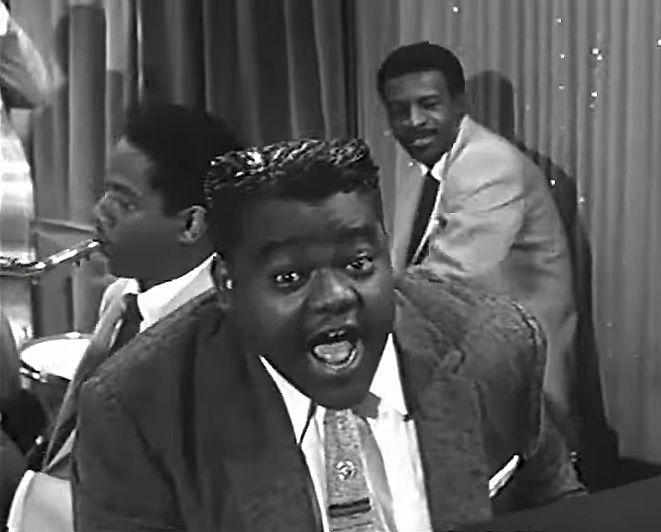
In childhood, I enjoyed some artists and songs associated with 1950s rock and roll, as well as boogie-woogie acts, such as the late Fats Domino. For instance, I liked his song “Ain’t That a Shame” (1956) about which one source states:
“Ain’t That a Shame” is a song written by Fats Domino and Dave Bartholomew. Domino’s recording of the song, originally stated as “Ain’t It a Shame”, released by Imperial Records in 1955, was a hit, eventually selling a million copies. It reached number one on the Billboard R&B chart and number 10 on the pop chart.
The song is ranked number 438 on Rolling Stone magazine’s 500 Greatest Songs of All Time list. This recording was included in the debut Fats Domino album Rock and Rollin’ with Fats Domino (1956) and next in the compilation Fats Domino Swings (12,000,000 Records) (1958).
As a kid, I vaguely comprehended the general major and minor premises of the song. Yet, as an adult, I developed a better grasp of this matter—which I’ll illustrate herein. For now, some context may be useful. Lyrics of “Ain’t That a Shame” state:
[Verse 1]
You made me cry
When you said goodbye
Ain’t that a shame?
My tears fell like rain
Ain’t that a shame?
You’re the one to blame
[Verse 2]
You broke my heart
When you said we’ll part
Ain’t that a shame?
My tears fell like rain
Ain’t that a shame?
You’re the one to blame
[Verse 3]
Oh well, goodbye
Although I’ll cry
Ain’t that a shame?
My tears fell like rain
Ain’t that a shame?
You’re the one to blame
According to the American Psychological Association (APA), shame is defined as “a highly unpleasant self-conscious emotion arising from the sense of there being something dishonorable, immodest, or indecorous in one’s own conduct or circumstances.”
Shame differs from guilt, as the APA defines the latter as “a self-conscious emotion characterized by a painful appraisal of having done (or thought) something that is wrong and often by a readiness to take action designed to undo or mitigate this wrong.”
When providing psychoeducational lessons on Rational Emotive Behavior Therapy (REBT), I invite people to consider that guilt relates to an unpleasant secondary emotion from the inside-out while shame relates to a similar experience from the outside-in.
As an example, if I accidentally strike a pedestrian with my vehicle, then I may feel guilt for having perceivably done wrong (i.e., inside-out). Simultaneously, bystanders may yell at me and state that I’ve done a dishonorable deed, as I’d then feel shame (i.e., outside-in).
Regarding the Fats Domino song, saying “ain’t that a shame” is an idiomatic expression meaning “isn’t it a pity” or “that’s unfortunate,” typically used to express genuine sympathy or disappointment. Still, it’s also used ironically regarding an unfortunate situation.
For instance, hypothetically having struck someone with my car, a friend may reply with genuine sympathy “ain’t that a shame the person jumped outta nowhere?” Still, a snarky bystander may state “ain’t that a shame that you’re going to jail” when expressing ironic faux sympathy for me.
Also worth noting, Fats Domino evoked blame (to find fault with, or to hold responsible). I could be held responsible (i.e., blamed) for striking a pedestrian with my vehicle. However, from the view of REBT, I couldn’t blame my reaction on others.
I say this because when using REBT I take personal responsibility and accountability (collectively “ownership”) for my reaction to unfortunate events. Whereas responsibility regards one’s duties or obligations, accountability concerns being called to answer for one’s actions.
Given this framing of REBT, as it pertains to shame and blame, I now turn toward the premises of “Ain’t That a Shame” that I vaguely understood as a child. Here, it’s worth stating that a modus ponens syllogism uses the following logical form: If p, then q; p; therefore, q.
Major premise: If you made me cry (p), then ain’t that a shame in regard to genuine sympathy (q)? Minor premise: You made me cry (p). Conclusion: Therefore, ain’t that a shame in regard to genuine sympathy (q)?
In childhood, I had sympathy for Fats Domino—who’d apparently experienced lovesickness concerning a failed intimate partner relationship. However, in adulthood, I now know better. At this time, using one of the major techniques of REBT, I’ll demonstrate what I mean.
REBT uses the ABC model to illustrate that when an undesirable Action occurs and you Believe an unhelpful narrative about the event, it’s your unfavorable assumption, not the occurrence itself, that causes an unpleasant Consequence. This is known as distress or disturbance.
In particular, there are four predominate irrational beliefs which people often use to distress or disturb themselves: global evaluations, low frustration tolerance, awfulizing, and demandingness. When contemplating these unproductive scripts, think of the acronym GLAD.
Fats Domino’s love interest said “goodbye” to him (Action), he hypothetically Believed, “Life is worthless without her [G], and I can’t bear to go on [L], because it’s abysmal that she’s left me [A], as she should’ve stayed [D],” and he then felt sadness and cried (Consequence).
Without taking personal ownership for his reaction to the undesirable event, Fats Domino went on to blame his ex-partner for his unpleasant outcome. Yet, the ex’s departure didn’t make the boogie-woogie artist cry to the point whereby his tears fell like rain. His perception did that!
Addressing how people upset themselves with unhelpful attitudes, the ABC model incorporates Disputation of unproductive philosophies of life in order to explore Effective new beliefs. Whereas rigid beliefs cause self-disturbance, flexible beliefs result in an un-disturbed condition.
It’s worth noting that Fats Domino eventually stated “oh well, goodbye” regarding the dissolution of his romantic relationship. According to one source, this is “an expression of mild disappointment or resignation: too bad; it’s a pity; what can you do; it is what it is.”
In the context of “Ain’t That a Shame”, I view “oh well” as akin to the ironic form of the expression “ain’t that a shame.” For instance, the artist hypothetically could’ve reasoned, “Ain’t that a shame that she’s gone? Now, I can be happy! So, oh well, goodbye!”
Using this form of an Effective new belief, one may still experience distress in the form of disappointment. This may be preferable to disturbance in the manner of misery. Both are negative emotional experiences, though the former is healthy and the latter is unhealthy.
Now, I present this lesson on REBT to you. Which would you prefer during undesirable events—to feel a healthy negative emotion (i.e., distress) or an unhealthy negative emotion (i.e., disturbance)? If you opt for the latter, then ain’t that a shame? Oh well, goodbye.
If you’re looking for a provider who tries to work to help understand how thinking impacts physical, mental, emotional, and behavioral elements of your life—helping you to sharpen your critical thinking skills, I invite you to reach out today by using the contact widget on my website.
As a psychotherapist, I’m pleased to try to help people with an assortment of issues ranging from anger (hostility, rage, and aggression) to relational issues, adjustment matters, trauma experience, justice involvement, attention-deficit hyperactivity disorder, anxiety and depression, and other mood or personality-related matters.
At Hollings Therapy, LLC, serving all of Texas, I aim to treat clients with dignity and respect while offering a multi-lensed approach to the practice of psychotherapy and life coaching. My mission includes: Prioritizing the cognitive and emotive needs of clients, an overall reduction in client suffering, and supporting sustainable growth for the clients I serve. Rather than simply trying to help you to feel better, I want to try to help you get better!
Deric Hollings, LPC, LCSW
References:
APA Dictionary of Psychology. (2018, April 19). Guilt. American Psychological Association. Retrieved from https://dictionary.apa.org/guilt
APA Dictionary of Psychology. (2018, April 19). Sadness. American Psychological Association. Retrieved from https://dictionary.apa.org/sadness
APA Dictionary of Psychology. (2018, April 19). Shame. American Psychological Association. Retrieved from https://dictionary.apa.org/shame
APA Dictionary of Psychology. (2018, April 19). Sympathy. American Psychological Association. Retrieved from https://dictionary.apa.org/sympathy
Apple Music. (n.d.). Fats Domino Swings. Retrieved from https://music.apple.com/us/album/fats-domino-swings/1396311078
Hollings, D. (2026, February 8). Adaptive and maladaptive emotions and behavior. Hollings Therapy, LLC. Retrieved from https://www.hollingstherapy.com/post/adaptive-and-maladaptive-emotions-and-behavior
Hollings, D. (2025, October 19). Adhering to invisible scripts. Hollings Therapy, LLC. Retrieved from https://www.hollingstherapy.com/post/adhering-to-invisible-scripts
Hollings, D. (2024, November 15). Assumptions. Hollings Therapy, LLC. Retrieved from https://www.hollingstherapy.com/post/assumptions
Hollings, D. (2024, November 24). Automatic thoughts and beliefs. Hollings Therapy, LLC. Retrieved from https://www.hollingstherapy.com/post/automatic-thoughts-and-beliefs
Hollings, D. (2024, August 7). Awfulizing. Hollings Therapy, LLC. Retrieved from https://www.hollingstherapy.com/post/awfulizing
Hollings, D. (2025, October 23). Bringing together sound teaching with sound conduct. Hollings Therapy, LLC. Retrieved from https://www.hollingstherapy.com/post/bringing-together-sound-teaching-with-sound-conduct
Hollings, D. (2026, February 12). Consciousness: Reach your soul. Hollings Therapy, LLC. Retrieved from https://www.hollingstherapy.com/post/consciousness-reach-your-soul
Hollings, D. (2024, October 27). Correlation does not imply causation. Hollings Therapy, LLC. Retrieved from https://www.hollingstherapy.com/post/correlation-does-not-imply-causation
Hollings, D. (2022, October 31). Demandingness. Hollings Therapy, LLC. Retrieved from https://www.hollingstherapy.com/post/demandingness
Hollings, D. (2022, March 15). Disclaimer. Hollings Therapy, LLC. Retrieved from https://www.hollingstherapy.com/post/disclaimer
Hollings, D. (2025, March 12). Distress vs. disturbance. Hollings Therapy, LLC. Retrieved from https://www.hollingstherapy.com/post/distress-vs-disturbance
Hollings, D. (2025, August 19). Doing right or wrong, as they see it. Hollings Therapy, LLC. Retrieved from https://www.hollingstherapy.com/post/doing-right-or-wrong-as-they-see-it
Hollings, D. (2025, December 5). Evaluations and appraisals: Men are gross, trash, and pigs. Hollings Therapy, LLC. Retrieved from https://www.hollingstherapy.com/post/evaluations-and-appraisals-men-are-gross-trash-and-pigs
Hollings, D. (2023, September 8). Fair use. Hollings Therapy, LLC. Retrieved from https://www.hollingstherapy.com/post/fair-use
Hollings, D. (2024, May 17). Feeling better vs. getting better. Hollings Therapy, LLC. Retrieved from https://www.hollingstherapy.com/post/feeling-better-vs-getting-better-1
Hollings, D. (2026, February 13). Five, four, three… beliefs. Hollings Therapy, LLC. Retrieved from https://www.hollingstherapy.com/post/five-four-three-beliefs
Hollings, D. (2023, October 12). Get better. Hollings Therapy, LLC. Retrieved from https://www.hollingstherapy.com/post/get-better
Hollings, D. (2023, September 13). Global evaluations. Hollings Therapy, LLC. Retrieved from https://www.hollingstherapy.com/post/global-evaluations
Hollings, D. (2024, August 27). Guilt and shame are choices. Hollings Therapy, LLC. Retrieved from https://www.hollingstherapy.com/post/guilt-and-shame-are-choices
Hollings, D. (n.d.). Hollings Therapy, LLC [Official website]. Hollings Therapy, LLC. Retrieved from https://www.hollingstherapy.com/
Hollings, D. (2024, February 14). Insufferable vs. undesirable. Hollings Therapy, LLC. Retrieved from https://www.hollingstherapy.com/post/insufferable-vs-undesirable
Hollings, D. (2025, October 13). Knowledge, wisdom, understanding. Hollings Therapy, LLC. Retrieved from https://www.hollingstherapy.com/post/knowledge-wisdom-understanding
Hollings, D. (2023, September 19). Life coaching. Hollings Therapy, LLC. Retrieved from https://www.hollingstherapy.com/post/life-coaching
Hollings, D. (2022, December 2). Low frustration tolerance. Hollings Therapy, LLC. Retrieved from https://www.hollingstherapy.com/post/low-frustration-tolerance
Hollings, D. (2022, October 30). Luv(sic). Hollings Therapy, LLC. Retrieved from https://www.hollingstherapy.com/post/luv-sic
Hollings, D. (2025, March 16). Modus ponens. Hollings Therapy, LLC. Retrieved from https://www.hollingstherapy.com/post/modus-ponens
Hollings, D. (2024, September 27). My attitude. Hollings Therapy, LLC. Retrieved from https://www.hollingstherapy.com/post/my-attitude
Hollings, D. (2025, August 2). My philosophy. Hollings Therapy, LLC. Retrieved from https://www.hollingstherapy.com/post/my-philosophy
Hollings, D. (2025, March 5). Pain. Hollings Therapy, LLC. Retrieved from https://www.hollingstherapy.com/post/pain
Hollings, D. (2025, April 9). Perception, action, and will. Hollings Therapy, LLC. Retrieved from https://www.hollingstherapy.com/post/perception-action-and-will
Hollings, D. (2023, December 25). Perception isn’t reality. Hollings Therapy, LLC. Retrieved from https://www.hollingstherapy.com/post/perception-isn-t-reality
Hollings, D. (2022, November 7). Personal ownership. Hollings Therapy, LLC. Retrieved from https://www.hollingstherapy.com/post/personal-ownership
Hollings, D. (2025, September 9). Personal responsibility and accountability. Hollings Therapy, LLC. Retrieved from https://www.hollingstherapy.com/post/personal-responsibility-and-accountability
Hollings, D. (2025, April 25). Preferences vs. expectations. Hollings Therapy, LLC. Retrieved from https://www.hollingstherapy.com/post/preferences-vs-expectations
Hollings, D. (2024, January 1). Psychoeducation. Hollings Therapy, LLC. Retrieved from https://www.hollingstherapy.com/post/psychoeducation
Hollings, D. (2024, May 5). Psychotherapist. Hollings Therapy, LLC. Retrieved from https://www.hollingstherapy.com/post/psychotherapist
Hollings, D. (2022, March 24). Rational emotive behavior therapy (REBT). Hollings Therapy, LLC. Retrieved from https://www.hollingstherapy.com/post/rational-emotive-behavior-therapy-rebt
Hollings, D. (2024, March 14). REBT and emotions. Hollings Therapy, LLC. Retrieved from https://www.hollingstherapy.com/post/rebt-and-emotions
Hollings, D. (2024, July 18). REBT flexibility. Hollings Therapy, LLC. Retrieved from https://www.hollingstherapy.com/post/rebt-flexibility
Hollings, D. (2024, January 4). Rigid vs. rigorous. Hollings Therapy, LLC. Retrieved from https://www.hollingstherapy.com/post/rigid-vs-rigorous
Hollings, D. (2025, January 15). Satisfaction. Hollings Therapy, LLC. Retrieved from https://www.hollingstherapy.com/post/satisfaction
Hollings, D. (2022, November 1). Self-disturbance. Hollings Therapy, LLC. Retrieved from https://www.hollingstherapy.com/post/self-disturbance
Hollings, D. (2026, April 21). Self-upset. Hollings Therapy, LLC. Retrieved from https://www.hollingstherapy.com/post/self-upset
Hollings, D. (2026, April 13). Shackled and miserable. Hollings Therapy, LLC. Retrieved from https://www.hollingstherapy.com/post/shackled-and-miserable
Hollings, D. (2025, November 6). The senses and self-defense. Hollings Therapy, LLC. Retrieved from https://www.hollingstherapy.com/post/the-senses-and-self-defense
Hollings, D. (2025, April 15). This cake smells unpleasant. Hollings Therapy, LLC. Retrieved from https://www.hollingstherapy.com/post/this-cake-smells-unpleasant
Hollings, D. (2025, February 28). To try is my goal. Hollings Therapy, LLC. Retrieved from https://www.hollingstherapy.com/post/to-try-is-my-goal
Hollings, D. (2025, April 18). Tolerable FAD. Hollings Therapy, LLC. Retrieved from https://www.hollingstherapy.com/post/tolerable-fad
Hollings, D. (2025, January 9). Traditional ABC model. Hollings Therapy, LLC. Retrieved from https://www.hollingstherapy.com/post/traditional-abc-model
Hollings, D. (2024, March 18). Unhealthy vs. healthy negative emotions. Hollings Therapy, LLC. Retrieved from https://www.hollingstherapy.com/post/unhealthy-vs-healthy-negative-emotions
Hollings, D. (2024, October 26). Unhelpful expectations. Hollings Therapy, LLC. Retrieved from https://www.hollingstherapy.com/post/unhelpful-expectations
Hollings, D. (2024, September 26). We’ll start from that premise. Hollings Therapy, LLC. Retrieved from https://www.hollingstherapy.com/post/we-ll-start-from-that-premise
Hollings, D. (2025, January 10). Who is the one to blame? Hollings Therapy, LLC. Retrieved from https://www.hollingstherapy.com/post/who-is-the-one-to-blame
Rockabillie, The. (2019, August 18). Fats Domino – Ain’t That a Shame (1956) – HD [Image; video]. YouTube. Retrieved from https://youtu.be/1Pqs_WZdUdM?si=Np1rgBygYZPJJLSs
Wikipedia. (n.d.). Ain’t That a Shame. Retrieved from https://en.wikipedia.org/wiki/Ain%27t_That_a_Shame
Wikipedia. (n.d.). Boogie-woogie. Retrieved from https://en.wikipedia.org/wiki/Boogie-woogie
Wikipedia. (n.d.). Dave Bartholomew. Retrieved from https://en.wikipedia.org/wiki/Dave_Bartholomew
Wikipedia. (n.d.). Fats Domino. Retrieved from https://en.wikipedia.org/wiki/Fats_Domino
Wikipedia. (n.d.). Rock and roll. Retrieved from https://en.wikipedia.org/wiki/Rock_and_roll
Wikipedia. (n.d.). Rock and Rollin’ with Fats Domino. Retrieved from https://en.wikipedia.org/wiki/Rock_and_Rollin%27_with_Fats_Domino
Wikipedia. (n.d.). Rolling Stone’s 500 Greatest Songs of All Time. Retrieved from https://en.wikipedia.org/wiki/Rolling_Stone%27s_500_Greatest_Songs_of_All_Time
Wiktionary. (n.d.). Oh well. Retrieved from https://en.wiktionary.org/wiki/oh_well#:~:text=(idiomatic)%20An%20expression%20of%20mild,it%20is%20what%20it%20is.


