White Horse: You Got to Be a Bitch

When providing psychoeducational lessons on Rational Emotive Behavior Therapy (REBT), I teach people about the ABC model of self-disturbance (how people upset themselves through use of irrational beliefs). Now, I’ll address a finer point of this psychotherapeutic model of wellness.
For context, REBT uses the ABC model to illustrate how when an undesirable Action occurs and you Believe an unhelpful narrative about the event, it’s your unfavorable assumption, not the occurrence itself, that causes an unpleasant Consequence. That negative outcome is disturbance.
In particular, there are four predominate irrational beliefs which people often use to disturb themselves: global evaluations, low frustration tolerance, awfulizing, and demandingness. When contemplating these unproductive Beliefs, think of the acronym GLAD.
It’s worth noting that the two forms of should, must, and ought-type demands with which people most often self-disturb are associated with use of absolutistic and conditional should beliefs. Generally speaking, these serve as rigid commands used toward oneself, others, and life.
An absolute must narrative is, “You absolutely must do as I say!” A conditional should narrative is, “Either you should do as I say, or you should be punished!” Noteworthy, in REBT literature, demandingness of this sort is said to function as a primary appraisal mechanism of disturbance.
Global evaluations (i.e., self-downing, other-downing, and life-downing), low frustration tolerance (also known as frustration intolerance), and awfulizing (e.g., terrible, horrible, etc.) function as secondary appraisal mechanisms. Together, GLAD will make you sad or mad, etc.
While still serving as prescriptive rather than descriptive, flexible use of recommendatory, preferential, ideal, empirical, moral and ethical, and legal ought beliefs won’t inevitably cause disturbance, as they may align with distress. Rigidity versus flexibility makes a difference.
Addressing how people upset themselves with unhelpful attitudes, the ABC model incorporates Disputation of unproductive philosophies of life in order to explore Effective new beliefs. Whereas rigid beliefs cause self-disturbance, flexible beliefs result in an un-disturbed condition.
Noteworthy, natural forms of distress are tolerable (i.e., mild anxiousness, sorrow, frustration, annoyance, disappointment, etc.). Even though unnatural forms of disturbance are also tolerable (e.g., enragement), my approach to REBT seeks the outcome which is more likely to be endured.
Now, I offer a finer point of understanding in regard to the ABC model. There are a number of flexible and inflexible terms related to demandingness which serve as derivatives to “should,” “must,” and “ought” types of self-disturbing philosophies regarding life.
For instance, “In order to understand what I’m saying, you have to pay attention,” “You better not allow your mind to wander,” “You need to listen,” and, “If you want to stop self-disturbing, then you gotta practice REBT.” Perhaps a real-world example may enrich your comprehension.
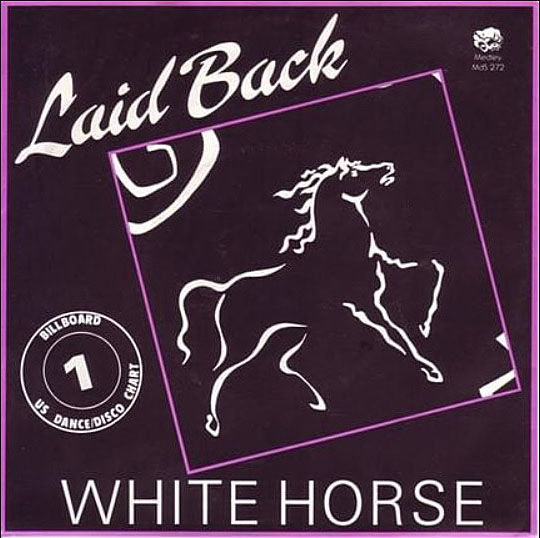
When residing with my dad and stepmom from half of my fifth to half of my seventh grade years, I came across an 8-track cartridge of the album Keep Smiling (1983) by Danish electronic dance music (EDM) duo Laid Back (John Guldberg and Tim Stahl).
Playing the album on our home stereo system, I became fascinated with the song “White Horse”. When asked about what the song meant, my dad laughed. However, my stepmom told me, “You just a kid, you don’t need to know ‘bout that.” For context, the lyrics include the following:
If you wanna ride
Don’t ride the white horse
If you wanna ride
Don’t ride the white horse
White horse
Don’t ride the white horse
White horse
Don’t ride the white horse
No, no, no
[…]
If you wanna ride
Ride the white pony
Ride
Ride the white pony
White pony
White pony
In my youthful cognizance, I envisioned Laid Back advocating one type of animal over another for suitability regarding a countryside trot. Yet, my perception was wrong, as one source states:
The song’s lyrics, which refer to riding “the white horse” and “the white pony”, have been interpreted as references to heroin and/or cocaine use. Rolling Stone described “White Horse” as “[p]erhaps the most unconvincing anti-drug song of all time”.
An article in Miami New Times listed it as one of the “top 10 cocaine songs” and stated, “It’s often debated whether the white horse in this song refers to cocaine or heroin. Either way, Laid Back’s 1983 single starts out persuading you not to ride the white horse but rather to ride the white pony, also a slang term for coke.”
The book Totally Awesome 80s described “White Horse” as “a song with very few words that still managed to be about the joys of cocaine”. An article in the Tampa Bay Times stated, “While the title seems harmless, those in the know figured out the song was about drugs.”
Co-writer Tim Stahl referred to an alternative interpretation of the song when interviewed for the book Flashbacks to Happiness: Eighties Music Revisited (published by iUniverse), saying, “Another cute anecdote about the song was when we got a letter from a little girl in Jutland in 1983, thanking us for making a song for her white pony!”
Apparently, I wasn’t alone in my ignorance of the song. One little girl’s naïveté and an untold number of adults who debated which drug was actually being referenced on the track served as a matter of confusion for many people. Nevertheless, I liked the song in childhood.
Then, as an adult, I heard the Moreno J EDM remix “Laid Back - White Horse (Moreno J Remix)”. Unlike some reworked versions of original songs, Moreno J maintained the integrity of his track’s predecessor. Relevant to the current post, “White Horse” lyrics include the following:
If you wanna be rich
You got to be a bitch
You got to be a bitch
I said rich
Rich
You bitch
The word “bitch” is offensively used to informally describe a malicious, spiteful, or overbearing woman, also used as a generalized term of disparagement for a woman, yet can at times refer to a man. Mainly, it references something that is extremely difficult, objectionable, or unpleasant.
In “White Horse”, lyrics state that “if you wanna be rich, you got to be a bitch.” In my mind, my stepmom reminds me, “You just a kid, you don’t need to know ‘bout that.” Yet, I’m now an adult, as I figure that in the interest of psychoeducation you may want to “know ‘bout that.”
Stating that you “got to” do one thing or another represents a derivative of a demandingness narrative. To demonstrate this matter, consider my remixed lyrics of “White Horse”. “If you wanna be rich, you should be malicious.” “If you wanna be rich, you must be spiteful.”
“If you wanna be rich, you ought to be overbearing.” Given this perspective, “got to” is synonymous with should, must, and ought-type demands. Importantly, flexibility versus inflexibility matters when using these mental scripts.
To illustrate this point, I invite you to consider two examples. First, imagine someone telling you, “If you wanna be rich, you preferably got to be a bitch. Why? Because people will otherwise mistake your kindness for weakness. So, if at all possible, you should be a bitch.”
Second, envision someone else saying, “If you wanna be rich, you absolutely got to be a bitch! Why? Because fuck everybody else; that’s why! You don’t owe anyone a fuckin’ reason for your attitude, so you unquestionably must be a bitch for general purposes!”
Of these two mental scrips – the first flexible and the second inflexible – which demand do you think would better serve your goals? I suppose your answer depends on what your goals are. If you wanna be rich, and don’t mind acting like a bitch, then the answer’s clear.
Alternatively, if you wanna be rich, though behaving like a bitch isn’t something you believe is reasonable, then you can acknowledge a preferential suggestion while simultaneously rejecting the advice. If the latter represents your view, then you can reject a false dilemma (i.e., either-or).
Per one source, a false dilemma “is an informal fallacy based on a premise that erroneously limits what options are available.” As an example, if you wanna ride, then either ride the white horse (i.e., heroin) or the white pony (i.e., cocaine). Can you think of a plausible third option?
Far be it for me to suggest alternative illicit substances used for riding (i.e., using, abusing, ingesting, etc.), though I suspect you can imagine other options. As well, taking my preferred stance which is rooted in lifelong sobriety, you can simply choose not to ride in the first place.
Similarly, if you wanna be rich, then either you preferably got to be a bitch, or you absolutely got to be a bitch. How about, instead of using an either-or script, you find other ways of attaining wealth? Or maybe you could take my preferred stance by not chasing possession-based riches.
The point here is that you have options. Thus, rather than placing unnecessary burdens upon yourself – such as use of a false dilemma, undergirded by demandingness – I encourage you to consider your options. After all, you don’t got to be a bitch – whether rich, poor, or otherwise.
Finally, as I anticipate someone using the self-disturbing narrative “Deric don’t got to use the word ‘bitch’ when teaching an REBT lesson,” I agree. And yet, I did so anyway. To you, I say, “You don’t got to read anything within my blog.” Now, ride along. [cues “White Horse” music]
If you’re looking for a provider who tries to work to help you understand how thinking impacts physical, mental, emotional, and behavioral elements of your life, I invite you to reach out today by using the contact widget on my website.
As the world’s foremost EDM-influenced REBT psychotherapist—promoting content related to EDM, I’m pleased to try to help people with an assortment of issues from anger (hostility, rage, and aggression) to relational issues, adjustment matters, trauma experience, justice involvement, attention-deficit hyperactivity disorder, anxiety and depression, and other mood or personality-related matters.
At Hollings Therapy, LLC, serving all of Texas, I aim to treat clients with dignity and respect while offering a multi-lensed approach to the practice of psychotherapy and life coaching. My mission includes: Prioritizing the cognitive and emotive needs of clients, an overall reduction in client suffering, and supporting sustainable growth for the clients I serve. Rather than simply trying to help you to feel better, I want to try to help you get better!
Deric Hollings, LPC, LCSW
References:
David, D. (2014, January). The empirical status of rational emotive behavior therapy (REBT) theory & practice. Albert Ellis Institute. Retrieved from https://citeseerx.ist.psu.edu/document?repid=rep1&type=pdf&doi=26813393d7370232253cf964c38a4a03d98b0b97
Genius. (n.d.). White Horse [Image]. Retrieved from https://genius.com/Laid-back-white-horse-lyrics
Hollings, D. (2025, August 22). A lifetime of sobriety. Hollings Therapy, LLC. Retrieved from https://www.hollingstherapy.com/post/a-lifetime-of-sobriety
Hollings, D. (2024, August 23). A rational case against self-disturbance. Hollings Therapy, LLC. Retrieved from https://www.hollingstherapy.com/post/a-rational-case-against-self-disturbance
Hollings, D. (2024, July 9). Absolutistic should beliefs. Hollings Therapy, LLC. Retrieved from https://www.hollingstherapy.com/post/absolutistic-should-beliefs
Hollings, D. (2025, October 19). Adhering to invisible scripts. Hollings Therapy, LLC. Retrieved from https://www.hollingstherapy.com/post/adhering-to-invisible-scripts
Hollings, D. (2024, November 15). Assumptions. Hollings Therapy, LLC. Retrieved from https://www.hollingstherapy.com/post/assumptions
Hollings, D. (2024, August 7). Awfulizing. Hollings Therapy, LLC. Retrieved from https://www.hollingstherapy.com/post/awfulizing
Hollings, D. (2023, July 2). Can’t go out sad. Hollings Therapy, LLC. Retrieved from https://www.hollingstherapy.com/post/can-t-go-out-sad
Hollings, D. (2024, July 9). Conditional should beliefs. Hollings Therapy, LLC. Retrieved from https://www.hollingstherapy.com/post/conditional-should-beliefs
Hollings, D. (2024, October 27). Correlation does not imply causation. Hollings Therapy, LLC. Retrieved from https://www.hollingstherapy.com/post/correlation-does-not-imply-causation
Hollings, D. (2022, October 31). Demandingness. Hollings Therapy, LLC. Retrieved from https://www.hollingstherapy.com/post/demandingness
Hollings, D. (2022, October 5). Description vs. prescription. Hollings Therapy, LLC. Retrieved from https://www.hollingstherapy.com/post/description-vs-prescription
Hollings, D. (2022, March 15). Disclaimer. Hollings Therapy, LLC. Retrieved from https://www.hollingstherapy.com/post/disclaimer
Hollings, D. (2025, March 12). Distress vs. disturbance. Hollings Therapy, LLC. Retrieved from https://www.hollingstherapy.com/post/distress-vs-disturbance
Hollings, D. (2024, July 10). Empirical should beliefs. Hollings Therapy, LLC. Retrieved from https://www.hollingstherapy.com/post/empirical-should-beliefs
Hollings, D. (2025, September 7). Everybody’s gotta learn sometime. Hollings Therapy, LLC. Retrieved from https://www.hollingstherapy.com/post/everybody-s-gotta-learn-sometime
Hollings, D. (2023, September 8). Fair use. Hollings Therapy, LLC. Retrieved from https://www.hollingstherapy.com/post/fair-use
Hollings, D. (2025, October 11). False dilemma vs. false dichotomy. Hollings Therapy, LLC. Retrieved from https://www.hollingstherapy.com/post/false-dilemma-vs-false-dichotomy
Hollings, D. (2024, May 17). Feeling better vs. getting better. Hollings Therapy, LLC. Retrieved from https://www.hollingstherapy.com/post/feeling-better-vs-getting-better-1
Hollings, D. (2025, March 5). Five major characteristics of four major irrational beliefs. Hollings Therapy, LLC. Retrieved from https://www.hollingstherapy.com/post/five-major-characteristics-of-four-major-irrational-beliefs
Hollings, D. (2023, October 12). Get better. Hollings Therapy, LLC. Retrieved from https://www.hollingstherapy.com/post/get-better
Hollings, D. (2023, September 13). Global evaluations. Hollings Therapy, LLC. Retrieved from https://www.hollingstherapy.com/post/global-evaluations
Hollings, D. (2024, April 13). Goals. Hollings Therapy, LLC. Retrieved from https://www.hollingstherapy.com/post/goals
Hollings, D. (2025, September 7). Have to. Hollings Therapy, LLC. Retrieved from https://www.hollingstherapy.com/post/have-to
Hollings, D. (2025, September 22). Hey you! You’re losing your mind! Hollings Therapy, LLC. Retrieved from https://www.hollingstherapy.com/post/hey-you-you-re-losing-your-mind
Hollings, D. (n.d.). Hollings Therapy, LLC [Official website]. Hollings Therapy, LLC. Retrieved from https://www.hollingstherapy.com/
Hollings, D. (2024, July 10). Ideal should beliefs. Hollings Therapy, LLC. Retrieved from https://www.hollingstherapy.com/post/ideal-should-beliefs
Hollings, D. (2024, April 27). Ideal-world vs. real-world. Hollings Therapy, LLC. Retrieved from https://www.hollingstherapy.com/post/ideal-world-vs-real-world
Hollings, D. (2025, January 26). Ignorance. Hollings Therapy, LLC. Retrieved from https://www.hollingstherapy.com/post/ignorance
Hollings, D. (2024, January 2). Interests and goals. Hollings Therapy, LLC. Retrieved from https://www.hollingstherapy.com/post/interests-and-goals
Hollings, D. (2024, September 26). Interpreted reality. Hollings Therapy, LLC. Retrieved from https://www.hollingstherapy.com/post/interpreted-reality
Hollings, D. (2025, June 13). It isn’t manly to be enraged. Hollings Therapy, LLC. Retrieved from https://www.hollingstherapy.com/post/it-isn-t-manly-to-be-enraged
Hollings, D. (2024, July 10). Legal should beliefs. Hollings Therapy, LLC. Retrieved from https://www.hollingstherapy.com/post/legal-should-beliefs
Hollings, D. (2023, September 19). Life coaching. Hollings Therapy, LLC. Retrieved from https://www.hollingstherapy.com/post/life-coaching
Hollings, D. (2025, January 8). Life-downing. Hollings Therapy, LLC. Retrieved from https://www.hollingstherapy.com/post/life-downing
Hollings, D. (2022, December 2). Low frustration tolerance. Hollings Therapy, LLC. Retrieved from https://www.hollingstherapy.com/post/low-frustration-tolerance
Hollings, D. (2024, July 10). Moral and ethical should beliefs. Hollings Therapy, LLC. Retrieved from https://www.hollingstherapy.com/post/moral-and-ethical-should-beliefs
Hollings, D. (2024, September 27). My attitude. Hollings Therapy, LLC. Retrieved from https://www.hollingstherapy.com/post/my-attitude
Hollings, D. (2025, August 2). My philosophy. Hollings Therapy, LLC. Retrieved from https://www.hollingstherapy.com/post/my-philosophy
Hollings, D. (2025, September 8). Need to know. Hollings Therapy, LLC. Retrieved from https://www.hollingstherapy.com/post/need-to-know
Hollings, D. (2024, November 3). Neurotic anxiety and fear. Hollings Therapy, LLC. Retrieved from https://www.hollingstherapy.com/post/neurotic-anxiety-and-fear
Hollings, D. (2025, August 31). Options. Hollings Therapy, LLC. Retrieved from https://www.hollingstherapy.com/post/options
Hollings, D. (2025, January 7). Other-downing. Hollings Therapy, LLC. Retrieved from https://www.hollingstherapy.com/post/other-downing
Hollings, D. (2025, April 9). Perception, action, and will. Hollings Therapy, LLC. Retrieved from https://www.hollingstherapy.com/post/perception-action-and-will
Hollings, D. (2024, September 17). Possessions make you rich? Hollings Therapy, LLC. Retrieved from https://www.hollingstherapy.com/post/possessions-make-you-rich
Hollings, D. (2024, July 10). Preferential should beliefs. Hollings Therapy, LLC. Retrieved from https://www.hollingstherapy.com/post/preferential-should-beliefs
Hollings, D. (2024, January 1). Psychoeducation. Hollings Therapy, LLC. Retrieved from https://www.hollingstherapy.com/post/psychoeducation
Hollings, D. (2023, September 15). Psychotherapeutic modalities. Hollings Therapy, LLC. Retrieved from https://www.hollingstherapy.com/post/psychotherapeutic-modalities
Hollings, D. (2024, May 5). Psychotherapist. Hollings Therapy, LLC. Retrieved from https://www.hollingstherapy.com/post/psychotherapist
Hollings, D. (2022, March 24). Rational emotive behavior therapy (REBT). Hollings Therapy, LLC. Retrieved from https://www.hollingstherapy.com/post/rational-emotive-behavior-therapy-rebt
Hollings, D. (2024, July 18). REBT flexibility. Hollings Therapy, LLC. Retrieved from https://www.hollingstherapy.com/post/rebt-flexibility
Hollings, D. (2024, July 10). Recommendatory should beliefs. Hollings Therapy, LLC. Retrieved from https://www.hollingstherapy.com/post/recommendatory-should-beliefs
Hollings, D. (2024, January 4). Rigid vs. rigorous. Hollings Therapy, LLC. Retrieved from https://www.hollingstherapy.com/post/rigid-vs-rigorous
Hollings, D. (2022, November 1). Self-disturbance. Hollings Therapy, LLC. Retrieved from https://www.hollingstherapy.com/post/self-disturbance
Hollings, D. (2025, January 6). Self-downing. Hollings Therapy, LLC. Retrieved from https://www.hollingstherapy.com/post/self-downing
Hollings, D. (2022, October 7). Should, must, and ought. Hollings Therapy, LLC. Retrieved from https://www.hollingstherapy.com/post/should-must-and-ought
Hollings, D. (2023, April 9). The advice that never was. Hollings Therapy, LLC. Retrieved from https://www.hollingstherapy.com/post/the-advice-that-never-was
Hollings, D. (2023, February 16). Tna. Hollings Therapy, LLC. Retrieved from https://www.hollingstherapy.com/post/__tna
Hollings, D. (2025, February 28). To try is my goal. Hollings Therapy, LLC. Retrieved from https://www.hollingstherapy.com/post/to-try-is-my-goal
Hollings, D. (2025, April 18). Tolerable FADs. Hollings Therapy, LLC. Retrieved from https://www.hollingstherapy.com/post/tolerable-fads
Hollings, D. (2025, January 9). Traditional ABC model. Hollings Therapy, LLC. Retrieved from https://www.hollingstherapy.com/post/traditional-abc-model
Hollings, D. (2024, September 29). Well, well, well. Hollings Therapy, LLC. Retrieved from https://www.hollingstherapy.com/post/well-well-well
Hollings, D. (2025, September 7). You better! Hollings Therapy, LLC. Retrieved from https://www.hollingstherapy.com/post/you-better
Hollings, D. (2024, November 24). You got to learn. Hollings Therapy, LLC. Retrieved from https://www.hollingstherapy.com/post/you-got-to-learn
Michaels, R. (2005). Flashbacks to Happiness: Eighties Music Revisited. iUniverse. Amazon. Retrieved from https://www.amazon.in/Flashbacks-Happiness-Eighties-Music-Revisited/dp/0595370071
Moreno J Remixes. (2021, December 13). Laid Back - White Horse (Moreno J Remix) [Video]. YouTube. Retrieved from https://youtu.be/fciGh1t5OUg?si=vDlqRl6dKxcNOFC6
Music for Dreams. (n.d.). Laid Back. Retrieved from https://www.musicfordreams.dk/artists/laid-back/
Rettenmund, M. (1996). Totally Awesome 80s: A Lexicon of the Music, Videos, Movies, TV Shows, Stars, and Trends of that Decadent Decade. St. Martin’s Griffin. Amazon. Retrieved from https://www.amazon.com/Totally-Awesome-80s-Lexicon-Decadent/dp/0312144369
Soundcloud. (n.d.). Moreno J. Retrieved from https://soundcloud.com/djmorenoj
Warner Music Denmark. (2013, January 24). Laid Back - White Horse [Official music video] [Video]. YouTube. Retrieved from https://youtu.be/mlYJf6CJXV8?si=xE4Qwi6jVhBCiUwm
Wikipedia. (n.d.). 8-track cartridge. Retrieved from https://en.wikipedia.org/wiki/8-track_cartridge
Wikipedia. (n.d.). False dilemma. Retrieved from https://en.wikipedia.org/wiki/False_dilemma
Wikipedia. (n.d.). John Guldberg. Retrieved from https://da.wikipedia.org/wiki/John_Guldberg
Wikipedia. (n.d.). Keep Smiling (album). Retrieved from https://en.wikipedia.org/wiki/Keep_Smiling_(album)
Wikipedia. (n.d.). Laid Back. Retrieved from https://en.wikipedia.org/wiki/Laid_Back
Wikipedia. (n.d.). White Horse (Laid Back song). Retrieved from https://en.wikipedia.org/wiki/White_Horse_(Laid_Back_song)


