Don't Be Afraid to Be Different

*PLUR1BUS (2025) spoilers contained herein.
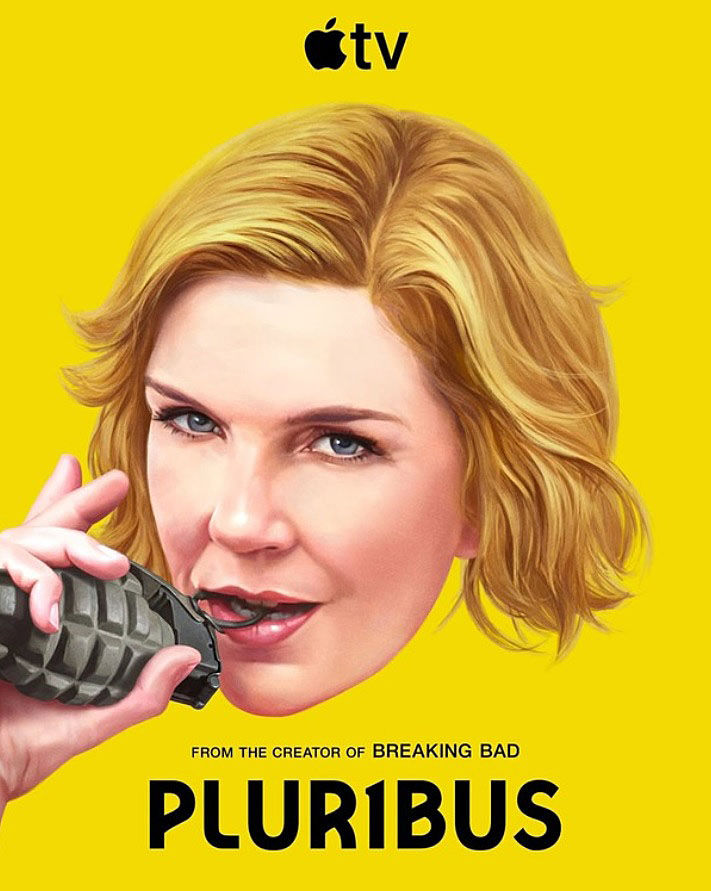
Photo credit, property of Apple TV, fair use
Personal Anecdote
Before knowing anything about tools of Rational Emotive Behavior Therapy (REBT), namely the ABC model (a scientific method of disputing one’s irrational beliefs) and unconditional acceptance (UA; a philosophical method of tolerating unpleasant events), I suffered quite a bit.
From a young age, I was always different (partly or totally unlike in nature, form, or quality). Specifically, I endured introversion (orientation toward the internal private world of one’s self and one’s inner thoughts and feelings, rather than toward the outer world of people and things).
I generally played alone with toys in my room. When venturing outdoors to play with other children, I often experienced ostracism (exclusion by general consent from common privileges or social acceptance). Sadly, I couldn’t quite understand why most other children didn’t like me.
Having been bullied by both my peers and even some adults, I continually tried to attach myself to various in-groups for inclusion (the act or practice of including and accommodating people who have historically been excluded). Eventually, I found comfort in self-imposed solitude.
In seventh grade, my mom took me and my sister to live in a children’s home. Although she promised that it would be a temporary matter, I’d never return to her care. In that placement setting, I was kicked out of one cottage (term for houses on the campus) and placed in another.
At the recommendation of a house parent (term for caregivers on the campus), I tried to fit in with other children by joining football teams in both eighth and ninth grade. However, one of the coaches nicknamed me “No Name,” because I was altogether unremarkable and easy to forget.
I was mocked by other boys. At the end of my ninth grade year, a family with whom I attended church services took me into their home. The behavior I exhibited from a token economy structure at the children’s home made me a desirable choice for an addition to their family.
However, the effects of institutionalization eventually wore off. Perhaps they experienced buyer’s remorse. In my senior year, I was kicked out of their home and once again moved into the children’s home. I was different, and by that point in my life I was fully aware of this fact.
Of course, there were indications to support this claim. From fifth to twelfth grade, I befriended gang members. Yet, I was too averse to groups than to join any set (a subgroup of a larger street gang). Oddly, one gangster nicknamed me “Suicide Psycho,” because I was supposedly “crazy.”
Not long after graduating high school, I enlisted in the United States Marine Corps. In boot camp, I was identified by one of the drill instructors as a recruit whose behavior was “belligerent” (inclined to or exhibiting assertiveness, hostility, or combativeness).
Fortunately, I made it through Marine Combat Training, the step following boot camp for non-infantry Marines, with relative ease. However, thereafter, I experienced difficulty fitting in with other people—as was the case throughout my childhood.
In military police school, I was disciplined for fighting another Marine. At my initial duty station, within my first few weeks on Okinawa, Japan, I was involved in a physical altercation. During my two years on the island, I was commonly ostracized from groups of other Marines.
Transferring to Marine Security Guard school, I was almost kicked out of the diplomatic security program. Apparently, my Minnesota Multiphasic Personality Inventory results were of concern for the lead psychologist in charge of screening candidates. He outright told me I was different.
My first post at Rio de Janeiro, Brasil was scheduled for 15 months. Yet, at the request of other Marines, I was transferred after only 13. My second post at Lima, Peru was also a 15-month post. Those Marines had me transferred out after only eight months.
After out-processing at Quantico, Virginia, I was sent to Marine Corps Air Station Miramar in San Diego, California. After two years of significant administrative and legal issues at that duty station, I was kicked out of the Marines. Once my appeal was denied, I served a total of 11 years.
I worked in a loss prevention position for a short period of time, and then I transferred to a position in the field of nuclear security. There, I was nicknamed “Twist Off,” because of my attitude of volatility (a tendency to change quickly and unpredictably).
Somehow, I was able to make it four years and eight months in that setting before my employment was terminated. Thereafter, I sought care for mental, emotional, and behavioral health (collectively “mental health”), because I believed that being different was unbearable.
After seeing dozens of military and veteran mental health providers, I was eventually diagnosed with posttraumatic stress disorder, attention-deficit/hyperactivity disorder, major depressive disorder, and traumatic brain injury. Apparently, traumatic events since childhood took a toll.
When initially diagnosed with psychological and neurological conditions, I experienced significant self-disturbance (the process of upsetting oneself through use of irrational beliefs). Then, when undergoing graduate studies for counseling, my academic focus was on REBT.
I learned about the ABC model and UA. At some point, I developed a healthy attitude of self-acceptance akin to rapper 2 Chainz’s song “I’m Different”, from his debut studio album Based on a T.R.U. Story (2012), as he acceptingly declares, “I’m different. Yeah, I’m different!”
In my graduate program, I learned that there was nothing inherently wrong with social isolation (voluntary or involuntary absence of contact with others). Irrespective of elements relating to nature, nurture, and other, some individuals simply prefer not to associate with groups of others.
I maintain that this is a matter of rational thinking (thinking according to logical rules, which is considered by many theorists to be a central part of intelligence), not rationalization (the unconscious process of logical reasons given to justify unacceptable behavior). Some disagree.
The first job I had out of graduate school resulted in termination. Even as I understood and believed in REBT tools, I admittedly wasn’t practicing them. Thus, I self-disturbed when being fired. To transition from intellectual to emotional insight, daily practice of REBT is necessary.
I was then accepted to a second graduate studies program, this time for social work. During those two years, I continued academic – though unfavorably not personal – focus on REBT. Perhaps unsurprisingly, I was almost kicked out of that program for frequent verbal disputes with others.
Some people who’ve heard about my life experience have suggested that I may have antisocial personality disorder (the presence of a chronic and pervasive disposition to disregard and violate the rights of others). While I may have traits of psychopathy, I don’t have a personality disorder.
My claim has been substantiated by psychological tests. A more fitting label, if one absolutely must insist on pathologizing my character, is asocial (declining to engage, or incapable of engaging, in social interaction; lacking sensitivity or regard for social values or norms).
Although I realize that some people don’t like hearing this, I identify with what rapper Cam’ron said on the introduction to his track “Welcome to My World”, from the 2013 mixtape Ghetto Heaven, Vol. 1, “Fuck you, shorty, I don’t do what everybody else do!” I’m different.
Perhaps as no surprise to virtually anyone, the first job I had out of graduate school for social work resulted in termination. I then decided to take time away from psychotherapy organizational settings and focus only on individual life coaching. I’ve done this since my youth.
Besides, a psychotherapist who previously supervised me for clinical hours regarding state licensure told me something to the effect of, “You don’t need to work for anyone. You need to work for yourself.” She ostensibly shared similar concerns as I regarding the mental health field.
After several years of life coaching while using REBT, I decided to complete the state licensing process that I started. This meant that I would once again enter an organizational setting. Twice, my new clinical supervisor threatened to terminate our professional relationship.
Favorably, I completed clinical hours, earned two professional licenses, and established Hollings Therapy, LLC—wherein I own and operate my company without any other employees. As well, I provide sessions solely through teletherapy. This is my dream setting!
When reflecting upon my life herein, I’m reminded of lyricist Logic’s song “Don’t Be Afraid to Be Different”, featuring rapper Will Smith, from the album Confessions of a Dangerous Mind (2019). The chorus states “Don’t be afraid to be different. Don’t be afraid to be different, y’all.”
I’ve been kicked out of various places, fired from numerous jobs, had my behavior misinterpreted as that relating to a psychopath, and I’ve been almost entirely dismissed by others. For many years, I self-disturbed about being different. It was a difficult first 30 years of life!
There’s no wonder why I valued lyricist Treach’s line from Naughty by Nature’s song “Everything’s Gonna Be Alright”, on Naughty by Nature (1991), “I[’ve] been a deadbeat, dead to the world, and dead wrong since I was born. That’s my life! Oh, you don’t know this song?”
That track got me through adolescence and early adulthood, until I discovered REBT and began the healthy practice of unconditional self-acceptance. Now, I fully accept that I’m an asocial person who’s different from many others. Though I’ve tried to be different than I am, this is me!
PLUR1BUS
My personal anecdote provided buffer room for the reader who doesn’t appreciate entertainment spoilers. Moving on. I watched Pluribus (stylized as PLUR1BUS), which is a post-apocalyptic science fiction television series that I enjoyed quite a bit. Describing the plot, one source states:
An alien code is implanted in every human on Earth, except for 13 people, including Carol (played by Rhea Seehorn). This code links the minds of nearly everyone into a single collective consciousness, creating hyper-intelligent pod people who share all knowledge.
Carol wants no part of it and is determined to reverse the transformation. The pod people, meanwhile, are intent on integrating her, not maliciously, but because they believe she’s missing out on a higher state of being.
When thinking of Pluribus, I’m reminded of The Matrix (1999), a science fiction action film that arguably represents the allegory of the cave—an allegory presented by the Greek philosopher Plato in his work Republic—in that the protagonist becomes aware of truth about reality.
Whereas “truth” is the body of real things, events, and facts, “reality” is something that is neither derivative nor dependent but exists necessarily. In Pluribus, Carol eventually realizes that her attempt to blend in with groups prior to the spread of an alien code correlated with disturbance.
For context, REBT uses the ABC model to illustrate that when an undesirable Action occurs and you Believe an unhelpful narrative about the event, it’s your unfavorable assumption, not the occurrence itself, that causes an unpleasant Consequence. This is known as self-disturbance.
In particular, there are four predominate irrational beliefs which people often use to upset themselves: global evaluations, low frustration tolerance, awfulizing, and demandingness. When contemplating these unproductive beliefs, think of the acronym GLAD.
Additionally, from a psychological standpoint, people disturb themselves using a Belief-Consequence (B-C) connection. Of course, this isn’t to suggest that in the context of the naturalistic or physical world there is no Action-Consequence (A-C) connection.
For instance, when an alien code spreads throughout Earth and infects people like a global virus (Action), all except 13 inhabitants of our planet are consciously linked to a hive mind (Consequence). For people like Carol and I, an A-C outcome of this sort isn’t at all desirable.
Therefore, when a hive mind results (Action), Carol ostensibly Believes, “Life is worthless without my individuality [G], and this is intolerable [L]. It’s horrible that this is happening [A], because it absolutely shouldn’t occur [D],” and she then experiences disturbance (Consequence).
Addressing how people upset themselves with B-C scripts, the ABC model incorporates Disputation of unproductive philosophies of life in order to explore Effective new beliefs. Whereas rigid beliefs cause self-disturbance, flexible beliefs result in an un-disturbed condition.
Noteworthy, I identify with Carol, in that I don’t completely reject all members of society. In Pluribus, Carol was able to pair bond with her intimate partner who unfavorably dies shortly after the alien code spreads. About this Action, Carol uses additional unhelpful Beliefs.
Still, in time, Carol falls in love with Zosia—an individual who serves the collective mind that intends on infecting Carol with the alien code, thereby creating a dilemma (a usually undesirable or unpleasant choice). Will she remain with Zosia or fight against her intimate partner?
I imagine that I would choose as Carol ultimately did by opting to reject the hive mind. For this option, Carol teams up with another Pluribus character with whom I identify: Manousos—a survivalist who risks his life to meet Carol, and who’s intent on destroying the alien code.
It may be one matter to envision oneself as a valiant hero that seeks the save the world, though it’s another matter altogether to resist the sway of a pluribus (of many) mindset. During the “dark days” of a global reaction to COVID-19, I observed a lot of parasitic mindsets.
For instance, per one source, “We’re All in This Together’ is a song from the Disney Channel Original Movie High School Musical,” and, “It was used [as a declaration of togetherness] in response to the COVID-19 pandemic in 2020.” I’m different, so I rejected that propaganda.
Productively, I didn’t self-disturb about what I witnessed during the overreaction to COVID-19. I wanted no part in a pluribus hive mind, so I helpfully used UA to tend to matters within my control and influence. This is something that I watched Carol and Manousos also consider.
For context, REBT uses unconditional acceptance (UA) to relieve self-induced B-C suffering. This is accomplished through use of unconditional self-acceptance (USA), unconditional other-acceptance (UOA), and unconditional life-acceptance (ULA).
With my approach to REBT, I incorporate author Stephen Covey’s concepts regarding the circles of control, influence, and concern, as well as an area of no concern. UA maps onto the circle of control (USA), circle of influence (UOA), and circle of concern and area of no concern (ULA).
The circle of control encompasses only oneself, the circle of influence encapsulates elements which may be subject to one’s sway, the circle of concern engrosses most matters one can imagine, and the area of no concern relates to all content which isn’t yet imagined.
In Pluribus, Carol and Manousos appear to have ultimately understood that they individually had control over only their reactions to the alien code (USA). As well, as only the first season of the show has been released, they are seemingly attempting to influence matters for the world (UOA).
Suppose they’re unsuccessful in this endeavor. If Carol and Manousos are able to acknowledge that in an impermanent and uncertain life there are no guarantees for humanity to carry on as it always has, then both characters will have effectively practiced ULA.
Similar to me, they’re different. Different doesn’t necessarily mean bad (failing to reach an acceptable standard), unhealthy (of a harmful nature), or unworthy (lacking in value). This brings us to the end of this post. Don’t be afraid to be different, if different is what you genuinely are.
After all, if an alien code sweeps through the globe or some questionable contaminant of skeptical origin spreads across the Earth as people rally behind a High School Musical song, being different may be the sort of characteristic one requires not to be enveloped by a hive mind.
In parting, on their 1994 album Southernplayalisticadillacmuzik, classic hip hop duo Outkast – consisting of lyricists André 3000 and Big Boi – released a break between songs entitled “True Dat (Interlude)” which featured the following vocals from spoken word artist Big Rube:
An Outkast is someone who is not considered to be part of the normal world
He’s looked at differently
He’s not accepted, because of his clothes, his hair, his occupation, his beliefs, or his skin color
Now look at yourself
Are you an Outkast?
I know I am
As a matter of fact, fuck being anything else
Don’t be afraid to be different, an Outkast, or an outcast of other varieties. Accepting yourself without rigid conditions just may save you, even if you’re unable to save the world!
If you’re looking for a provider who tries to work to help you understand how thinking impacts physical, mental, emotional, and behavioral elements of your life, I invite you to reach out today by using the contact widget on my website.
As the world’s foremost hip hop-influenced REBT psychotherapist, I’m pleased to try to help people with an assortment of issues from anger (hostility, rage, and aggression) to relational issues, adjustment matters, trauma experience, justice involvement, attention-deficit hyperactivity disorder, anxiety and depression, and other mood or personality-related matters.
At Hollings Therapy, LLC, serving all of Texas, I aim to treat clients with dignity and respect while offering a multi-lensed approach to the practice of psychotherapy and life coaching. My mission includes: Prioritizing the cognitive and emotive needs of clients, an overall reduction in client suffering, and supporting sustainable growth for the clients I serve. Rather than simply trying to help you to feel better, I want to try to help you get better!
Deric Hollings, LPC, LCSW
References:
2 Chainz. (2012, December 23). 2 Chainz – I’m Different (explicit) [Video]. YouTube. Retrieved from https://youtu.be/e2QKlmMT8II?si=yBUpoP0bu4Z5Ours
APA Dictionary of Psychology. (2023, November 11). Antisocial personality disorder. American Psychological Association. Retrieved from https://dictionary.apa.org/antisocial-personality-disorder
APA Dictionary of Psychology. (2018, April 19). Asocial. American Psychological Association. Retrieved from https://dictionary.apa.org/asocial
APA Dictionary of Psychology. (2018, April 19). Attention-deficit/hyperactivity disorder (ADHD). American Psychological Association. Retrieved from https://dictionary.apa.org/attention-deficithyperactivity-disorder
APA Dictionary of Psychology. (2023, November 11). Institutionalization. American Psychological Association. Retrieved from https://dictionary.apa.org/institutionalization
APA Dictionary of Psychology. (2018, April 19). Introversion. American Psychological Association. Retrieved from https://dictionary.apa.org/introversion
APA Dictionary of Psychology. (2023, November 15). Major depressive disorder. American Psychological Association. Retrieved from https://dictionary.apa.org/major-depressive-disorder
APA Dictionary of Psychology. (2018, April 19). Pair bond. American Psychological Association. Retrieved from https://dictionary.apa.org/pair-bond
APA Dictionary of Psychology. (2023, November 15). Posttraumatic stress disorder (PTSD). American Psychological Association. Retrieved from https://dictionary.apa.org/posttraumatic-stress-disorder
APA Dictionary of Psychology. (2018, April 19). Psychological test. American Psychological Association. Retrieved from https://dictionary.apa.org/psychological-test
APA Dictionary of Psychology. (2018, April 19). Rational thinking. American Psychological Association. Retrieved from https://dictionary.apa.org/rational-thinking
APA Dictionary of Psychology. (2018, April 19). Rationalization. American Psychological Association. Retrieved from https://dictionary.apa.org/rationalization
APA Dictionary of Psychology. (2018, April 19). Social isolation. American Psychological Association. Retrieved from https://dictionary.apa.org/social-isolation
APA Dictionary of Psychology. (2018, April 19). Traumatic brain injury (TBI). American Psychological Association. Retrieved from https://dictionary.apa.org/traumatic-brain-injury
Apple Music. (n.d.). Ghetto Heaven, Vol. 1. Apple Inc. Retrieved from https://music.apple.com/us/album/ghetto-heaven-vol-1/1711344034
Cam’ron. (2023, October 10). Welcome to My World [Video]. YouTube. Retrieved from https://youtu.be/IMv13XjYkqA?si=mxx6aIJ663LqAU3l
Hollings, D. (2024, May 22). A philosophical approach to mental health. Hollings Therapy, LLC. Retrieved from https://www.hollingstherapy.com/post/a-philosophical-approach-to-mental-health
Hollings, D. (2024, May 24). A scientific approach to mental health. Hollings Therapy, LLC. Retrieved from https://www.hollingstherapy.com/post/a-scientific-approach-to-mental-health
Hollings, D. (2024, July 9). Absolutistic should beliefs. Hollings Therapy, LLC. Retrieved from https://www.hollingstherapy.com/post/absolutistic-should-beliefs
Hollings, D. (2025, October 19). Adhering to invisible scripts. Hollings Therapy, LLC. Retrieved from https://www.hollingstherapy.com/post/adhering-to-invisible-scripts
Hollings, D. (2025, September 24). Animalistic instinct: Just because it seems right doesn’t mean it is. Hollings Therapy, LLC. Retrieved from https://www.hollingstherapy.com/post/animalistic-instinct-just-because-it-seems-right-doesn-t-mean-it-is
Hollings, D. (2024, November 15). Assumptions. Hollings Therapy, LLC. Retrieved from https://www.hollingstherapy.com/post/assumptions
Hollings, D. (2024, November 24). Automatic thoughts and beliefs. Hollings Therapy, LLC. Retrieved from https://www.hollingstherapy.com/post/automatic-thoughts-and-beliefs
Hollings, D. (2024, August 7). Awfulizing. Hollings Therapy, LLC. Retrieved from https://www.hollingstherapy.com/post/awfulizing
Hollings, D. (2022, November 18). Big T, little t. Hollings Therapy, LLC. Retrieved from https://www.hollingstherapy.com/post/big-t-little-t
Hollings, D. (2024, July 15). Bullying. Hollings Therapy, LLC. Retrieved from https://www.hollingstherapy.com/post/bullying
Hollings, D. (2023, May 11). Catering to DEIA. Hollings Therapy, LLC. Retrieved from https://www.hollingstherapy.com/post/catering-to-deia
Hollings, D. (2022, May 17). Circle of concern. Hollings Therapy, LLC. Retrieved from https://www.hollingstherapy.com/post/circle-of-concern
Hollings, D. (2024, July 11). Concern and no concern. Hollings Therapy, LLC. Retrieved from https://www.hollingstherapy.com/post/concern-and-no-concern
Hollings, D. (2024, July 9). Conditional should beliefs. Hollings Therapy, LLC. Retrieved from https://www.hollingstherapy.com/post/conditional-should-beliefs
Hollings, D. (2023, April 22). Control. Hollings Therapy, LLC. Retrieved from https://www.hollingstherapy.com/post/control
Hollings, D. (2025, October 3). Control and influence: A soft center and coated in a candy shell. Hollings Therapy, LLC. Retrieved from https://www.hollingstherapy.com/post/control-and-influence-a-soft-center-and-coated-in-a-candy-shell
Hollings, D. (2024, October 27). Correlation does not imply causation. Hollings Therapy, LLC. Retrieved from https://www.hollingstherapy.com/post/correlation-does-not-imply-causation
Hollings, D. (2024, September 14). Crazy. Hollings Therapy, LLC. Retrieved from https://www.hollingstherapy.com/post/crazy
Hollings, D. (2025, June 17). Daily practice. Hollings Therapy, LLC. Retrieved from https://www.hollingstherapy.com/post/daily-practice
Hollings, D. (2022, October 31). Demandingness. Hollings Therapy, LLC. Retrieved from https://www.hollingstherapy.com/post/demandingness
Hollings, D. (2024, October 21). Desire. Hollings Therapy, LLC. Retrieved from https://www.hollingstherapy.com/post/desire
Hollings, D. (2025, May 4). Dilemmas and paradoxes. Hollings Therapy, LLC. Retrieved from https://www.hollingstherapy.com/post/dilemmas-and-paradoxes
Hollings, D. (2022, March 15). Disclaimer. Hollings Therapy, LLC. Retrieved from https://www.hollingstherapy.com/post/disclaimer
Hollings, D. (2025, September 4). Do degrees infer intelligence? Hollings Therapy, LLC. Retrieved from https://www.hollingstherapy.com/post/do-degrees-infer-intelligence
Hollings, D. (2025, May 16). Eff the logic. Hollings Therapy, LLC. Retrieved from https://www.hollingstherapy.com/post/eff-the-logic
Hollings, D. (2025, December 13). Explanation and justification. Hollings Therapy, LLC. Retrieved from https://www.hollingstherapy.com/post/explanation-and-justification
Hollings, D. (2025, March 9). Factual and counterfactual beliefs. Hollings Therapy, LLC. Retrieved from https://www.hollingstherapy.com/post/factual-and-counterfactual-beliefs
Hollings, D. (2023, September 8). Fair use. Hollings Therapy, LLC. Retrieved from https://www.hollingstherapy.com/post/fair-use
Hollings, D. (2024, May 17). Feeling better vs. getting better. Hollings Therapy, LLC. Retrieved from https://www.hollingstherapy.com/post/feeling-better-vs-getting-better-1
Hollings, D. (2025, March 5). Five major characteristics of four major irrational beliefs. Hollings Therapy, LLC. Retrieved from https://www.hollingstherapy.com/post/five-major-characteristics-of-four-major-irrational-beliefs
Hollings, D. (2023, October 12). Get better. Hollings Therapy, LLC. Retrieved from https://www.hollingstherapy.com/post/get-better
Hollings, D. (2023, September 13). Global evaluations. Hollings Therapy, LLC. Retrieved from https://www.hollingstherapy.com/post/global-evaluations
Hollings, D. (2024, August 9). Healthy concern. Hollings Therapy, LLC. Retrieved from https://www.hollingstherapy.com/post/healthy-concern
Hollings, D. (2025, September 22). Hey you! You’re losing your mind! Hollings Therapy, LLC. Retrieved from https://www.hollingstherapy.com/post/hey-you-you-re-losing-your-mind
Hollings, D. (n.d.). Hollings Therapy, LLC [Official website]. Hollings Therapy, LLC. Retrieved from https://www.hollingstherapy.com/
Hollings, D. (2023, October 18). Hulk. Hollings Therapy, LLC. Retrieved from https://www.hollingstherapy.com/post/hulk
Hollings, D. (2025, October 23). I can’t stand it. Hollings Therapy, LLC. Retrieved from https://www.hollingstherapy.com/post/i-can-t-stand-it
Hollings, D. (2024, October 21). Impermanence and uncertainty. Hollings Therapy, LLC. Retrieved from https://www.hollingstherapy.com/post/impermanence-and-uncertainty
Hollings, D. (2024, August 21). In-group and out-group distinction. Hollings Therapy, LLC. Retrieved from https://www.hollingstherapy.com/post/in-group-and-out-group-distinction
Hollings, D. (2024, June 15). Innocente (falling in love). Hollings Therapy, LLC. Retrieved from https://www.hollingstherapy.com/post/innocente-falling-in-love
Hollings, D. (2024, May 27). Intellectual vs. emotional insight. Hollings Therapy, LLC. Retrieved from https://www.hollingstherapy.com/post/intellectual-vs-emotional-insight
Hollings, D. (2024, September 26). Interpreted reality. Hollings Therapy, LLC. Retrieved from https://www.hollingstherapy.com/post/interpreted-reality
Hollings, D. (2024, June 13). Just the tip. Hollings Therapy, LLC. Retrieved from https://www.hollingstherapy.com/post/just-the-tip
Hollings, D. (2025, October 13). Knowledge, wisdom, understanding. Hollings Therapy, LLC. Retrieved from https://www.hollingstherapy.com/post/knowledge-wisdom-understanding
Hollings, D. (2022, November 10). Labeling. Hollings Therapy, LLC. Retrieved from https://www.hollingstherapy.com/post/labeling
Hollings, D. (2023, September 19). Life coaching. Hollings Therapy, LLC. Retrieved from https://www.hollingstherapy.com/post/life-coaching
Hollings, D. (2022, December 2). Low frustration tolerance. Hollings Therapy, LLC. Retrieved from https://www.hollingstherapy.com/post/low-frustration-tolerance
Hollings, D. (2023, March 21). Matching bracelets. Hollings Therapy, LLC. Retrieved from https://www.hollingstherapy.com/post/matching-bracelets
Hollings, D. (2024, March 4). Mental, emotional, and behavioral health. Hollings Therapy, LLC. Retrieved from https://www.hollingstherapy.com/post/mental-emotional-and-behavioral-health
Hollings, D. (2025, November 16). Mental health, mental illness, and mental disorder. Hollings Therapy, LLC. Retrieved from https://www.hollingstherapy.com/post/mental-health-mental-illness-and-mental-disorder
Hollings, D. (2024, September 27). My attitude. Hollings Therapy, LLC. Retrieved from https://www.hollingstherapy.com/post/my-attitude
Hollings, D. (2025, August 2). My philosophy. Hollings Therapy, LLC. Retrieved from https://www.hollingstherapy.com/post/my-philosophy
Hollings, D. (2025, February 19). Nature, nurture, and other. Hollings Therapy, LLC. Retrieved from https://www.hollingstherapy.com/post/nature-nurture-and-other
Hollings, D. (2025, November 3). Normativity standard. Hollings Therapy, LLC. Retrieved from https://www.hollingstherapy.com/post/normativity-standard
Hollings, D. (2025, September 26). Observing eye and perceiving eye. Hollings Therapy, LLC. Retrieved from https://www.hollingstherapy.com/post/observing-eye-and-perceiving-eye
Hollings, D. (2024, April 22). On disputing. Hollings Therapy, LLC. Retrieved from https://www.hollingstherapy.com/post/on-disputing
Hollings, D. (2023, September 3). On feelings. Hollings Therapy, LLC. Retrieved from https://www.hollingstherapy.com/post/on-feelings
Hollings, D. (2023, April 24). On truth. Hollings Therapy, LLC. Retrieved from https://www.hollingstherapy.com/post/on-truth
Hollings, D. (2024, September 4). Pathologizing. Hollings Therapy, LLC. Retrieved from https://www.hollingstherapy.com/post/pathologizing
Hollings, D. (2023, November 22). Personality disorders. Hollings Therapy, LLC. Retrieved from https://www.hollingstherapy.com/post/personality-disorders
Hollings, D. (2025, April 30). Plato’s allegory of the cave. Hollings Therapy, LLC. Retrieved from https://www.hollingstherapy.com/post/plato-s-allegory-of-the-cave
Hollings, D. (2023, March 20). Practice. Hollings Therapy, LLC. Retrieved from https://www.hollingstherapy.com/post/practice
Hollings, D. (2025, April 25). Preferences vs. expectations. Hollings Therapy, LLC. Retrieved from https://www.hollingstherapy.com/post/preferences-vs-expectations
Hollings, D. (2024, March 6). Psychopathy. Hollings Therapy, LLC. Retrieved from https://www.hollingstherapy.com/post/psychopathy
Hollings, D. (2024, May 5). Psychotherapist. Hollings Therapy, LLC. Retrieved from https://www.hollingstherapy.com/post/psychotherapist
Hollings, D. (2022, March 24). Rational emotive behavior therapy (REBT). Hollings Therapy, LLC. Retrieved from https://www.hollingstherapy.com/post/rational-emotive-behavior-therapy-rebt
Hollings, D. (2025, August 13). Rational versus irrational thoughts and beliefs. Hollings Therapy, LLC. Retrieved from https://www.hollingstherapy.com/post/rational-versus-irrational-thoughts-and-beliefs
Hollings, D. (2024, December 5). Reasoning. Hollings Therapy, LLC. Retrieved from https://www.hollingstherapy.com/post/reasoning
Hollings, D. (2024, July 18). REBT flexibility. Hollings Therapy, LLC. Retrieved from https://www.hollingstherapy.com/post/rebt-flexibility
Hollings, D. (2024, July 10). Recommendatory should beliefs. Hollings Therapy, LLC. Retrieved from https://www.hollingstherapy.com/post/recommendatory-should-beliefs
Hollings, D. (2024, February 22). Relax your mind, let your conscious be free. Hollings Therapy, LLC. Retrieved from https://www.hollingstherapy.com/post/relax-your-mind-let-your-conscious-be-free
Hollings, D. (2023, February 17). Revisiting the circle of control. Hollings Therapy, LLC. Retrieved from https://www.hollingstherapy.com/post/revisiting-the-circle-of-control
Hollings, D. (2024, January 4). Rigid vs. rigorous. Hollings Therapy, LLC. Retrieved from https://www.hollingstherapy.com/post/rigid-vs-rigorous
Hollings, D. (2022, November 1). Self-disturbance. Hollings Therapy, LLC. Retrieved from https://www.hollingstherapy.com/post/self-disturbance
Hollings, D. (2025, November 18). Self-love and self-acceptance. Hollings Therapy, LLC. Retrieved from https://www.hollingstherapy.com/post/self-love-and-self-acceptance
Hollings, D. (2024, January 5). Sensitivity. Hollings Therapy, LLC. Retrieved from https://www.hollingstherapy.com/post/sensitivity
Hollings, D. (2022, June 20). Teletherapy. Hollings Therapy, LLC. Retrieved from https://www.hollingstherapy.com/post/teletherapy
Hollings, D. (2023, September 6). The absence of suffering. Hollings Therapy, LLC. Retrieved from https://www.hollingstherapy.com/post/the-absence-of-suffering
Hollings, D. (2022, December 23). The A-C connection. Hollings Therapy, LLC. Retrieved from https://www.hollingstherapy.com/post/the-a-c-connection
Hollings, D. (2022, December 25). The B-C connection. Hollings Therapy, LLC. Retrieved from https://www.hollingstherapy.com/post/the-b-c-connection
Hollings, D. (2025, August 31). The cause of my irritation is not in this person but in me. Hollings Therapy, LLC. Retrieved from https://www.hollingstherapy.com/post/ the-cause-of-my-irritation-is-not-in-this-person-but-in-me
Hollings, D. (2025, February 10). The huddle. Hollings Therapy, LLC. Retrieved from https://www.hollingstherapy.com/post/the-huddle
Hollings, D. (2022, December 14). The is-ought problem. Hollings Therapy, LLC. Retrieved from https://www.hollingstherapy.com/post/the-is-ought-problem
Hollings, D. (2025, February 28). To try is my goal. Hollings Therapy, LLC. Retrieved from https://www.hollingstherapy.com/post/to-try-is-my-goal
Hollings, D. (2024, June 14). Tolerance. Hollings Therapy, LLC. Retrieved from https://www.hollingstherapy.com/post/tolerance
Hollings, D. (2025, January 9). Traditional ABC model. Hollings Therapy, LLC. Retrieved from https://www.hollingstherapy.com/post/traditional-abc-model
Hollings, D. (2025, December 17). Two handles. Hollings Therapy, LLC. Retrieved from https://www.hollingstherapy.com/post/two-handles
Hollings, D. (2024, October 20). Unconditional acceptance redux. Hollings Therapy, LLC. Retrieved from https://www.hollingstherapy.com/post/unconditional-acceptance-redux
Hollings, D. (2023, March 1). Unconditional self-acceptance. Hollings Therapy, LLC. Retrieved from https://www.hollingstherapy.com/post/unconditional-self-acceptance
Hollings, D. (2024, January 16). Understanding, belief, and practice. Hollings Therapy, LLC. Retrieved from https://www.hollingstherapy.com/post/understanding-belief-and-practice
Hollings, D. (2024, November 23). Use of self. Hollings Therapy, LLC. Retrieved from https://www.hollingstherapy.com/post/use-of-self
Hollings, D. (2025, February 9). Value. Hollings Therapy, LLC. Retrieved from https://www.hollingstherapy.com/post/value
Hollings, D. (2024, November 24). Values. Hollings Therapy, LLC. Retrieved from https://www.hollingstherapy.com/post/values
Hollings, D. (2022, August 8). Was Freud right? Hollings Therapy, LLC. Retrieved from https://www.hollingstherapy.com/post/was-freud-right
Hollings, D. (2024, April 17). Wishes, dreams, and goals. Hollings Therapy, LLC. Retrieved from https://www.hollingstherapy.com/post/wishes-dreams-and-goals
Hollings, D. (2025, October 20). You need to stop. Hollings Therapy, LLC. Retrieved from https://www.hollingstherapy.com/post/ you-need-to-stop
IMP Awards. (n.d.). Plur1bus Poster (#3 of 3) [Image]. Retrieved from http://www.impawards.com/tv/pluribus_ver3.html
Rowles, D. (2025, November 17). What is Vince Gilligan’s ‘Pluribus’ about? Pajiba. Retrieved from https://www.pajiba.com/tv_reviews/what-is-vince-gilligans-pluribus-about-the-nature-of-happiness.php
Theman65. (2009, May 22). Shorty. Urban Dictionary. Retrieved from https://www.urbandictionary.com/define.php?term=shorty
Tommy Boy. (2018, June 18). Naughty by Nature – Everything’s Gonna Be Alright (Official music video) [Video]. YouTube. Retrieved from https://youtu.be/DoSdfhaMXQU?si=NQ5iddLBshzjI_TS
Outkast. (2015, June 8). True Dat (Interlude) [Video]. YouTube. Retrieved from https://youtu.be/3yVjbtf9I1g?si=XpPPr4EUAYtQ9TaK
Visionary Music Group. (2019, May 9). Logic – Don’t Be Afraid to Be Different (feat. Will Smith) (Official audio) [Video]. YouTube. Retrieved from https://youtu.be/qfjLJrsXCMM?si=9YhYTzdANcER3eio
Wikipedia. (n.d.). 2 Chainz. Retrieved from https://en.wikipedia.org/wiki/2_Chainz
Wikipedia. (n.d.). André 3000. Retrieved from https://en.wikipedia.org/wiki/Andr%C3%A9_3000
Wikipedia. (n.d.). Based on a T.R.U. Story. Retrieved from https://en.wikipedia.org/wiki/Based_on_a_T.R.U._Story
Wikipedia. (n.d.). Big Boi. Retrieved from https://en.wikipedia.org/wiki/Big_Boi
Wikipedia. (n.d.). Big Rube. Retrieved from https://en.wikipedia.org/wiki/Big_Rube
Wikipedia. (n.d.). Cam’ron. Retrieved from https://en.wikipedia.org/wiki/Cam%27ron
Wikipedia. (n.d.). Confessions of a Dangerous Mind (album). Retrieved from https://en.wikipedia.org/wiki/Confessions_of_a_Dangerous_Mind_(album)
Wikipedia. (n.d.). High School Musical. Retrieved from https://en.wikipedia.org/wiki/High_School_Musical
Wikipedia. (n.d.). Hive mind. Retrieved from https://en.wikipedia.org/wiki/Hive_mind
Wikipedia. (n.d.). Logic (rapper). Retrieved from https://en.wikipedia.org/wiki/Logic_(rapper)
Wikipedia. (n.d.). Marine Security Guard. Retrieved from https://en.wikipedia.org/wiki/Marine_Security_Guard
Wikipedia. (n.d.). Military police. Retrieved from https://en.wikipedia.org/wiki/Military_police
Wikipedia. (n.d.). Minnesota Multiphasic Personality Inventory. Retrieved from https://en.wikipedia.org/wiki/Minnesota_Multiphasic_Personality_Inventory
Wikipedia. (n.d.). Naughty by Nature. Retrieved from https://en.wikipedia.org/wiki/Naughty_by_Nature
Wikipedia. (n.d.). Naughty by Nature (album). Retrieved from https://en.wikipedia.org/wiki/Naughty_by_Nature_(album)
Wikipedia. (n.d.). Outkast. Retrieved from https://en.wikipedia.org/wiki/Outkast
Wikipedia. (n.d.). Plato. Retrieved from https://en.wikipedia.org/wiki/Plato
Wikipedia. (n.d.). Pluribus (TV series). Retrieved from https://en.wikipedia.org/wiki/Pluribus_(TV_series)
Wikipedia. (n.d.). Propaganda. Retrieved from https://en.wikipedia.org/wiki/Propaganda
Wikipedia. (n.d.). Republic (Plato). Retrieved from https://en.wikipedia.org/wiki/Republic_(Plato)
Wikipedia. (n.d.). Rhea Seehorn. Retrieved from https://en.wikipedia.org/wiki/Rhea_Seehorn
Wikipedia. (n.d.). Southernplayalisticadillacmuzik. Retrieved from https://en.wikipedia.org/wiki/Southernplayalisticadillacmuzik
Wikipedia. (n.d.). Stephen Covey. Retrieved from https://en.wikipedia.org/wiki/Stephen_Covey
Wikipedia. (n.d.). The Matrix. Retrieved from https://en.wikipedia.org/wiki/The_Matrix
Wikipedia. (n.d.). Token economy. Retrieved from https://en.wikipedia.org/wiki/Token_economy
Wikipedia. (n.d.). Treach. Retrieved from https://en.wikipedia.org/wiki/Treach
Wikipedia. (n.d.). We’re All in This Together (High School Musical song). Retrieved from https://en.wikipedia.org/wiki/We%27re_All_in_This_Together_(High_School_Musical_song)
Wikipedia. (n.d.). Will Smith. Retrieved from https://en.wikipedia.org/wiki/Will_Smith


