Carnales: I Wish You Were Here

My introduction to gangs and gang sets was in fifth grade, when I was occasionally assaulted and battered by members of the Crips during recess and after school let out for the day. Unlike the common saying “if you can’t beat them, join them,” I simply chose to befriend gang members.
In doing so, I was no longer bullied. Then, after having continued friendly relations with the Crips until and throughout high school, I also befriended members of the Bloods and Sureños. Having spent a significant amount of time with Sureños, I considered them to be carnales.
Describing the singular term “carnal,” one source states that it’s an “abbreviation of ‘primo carnal’ which is first cousin in Spanish, to denote that you consider the other person as part of your close family.” Whereas “carnal” is the singular word, “carnales” is the plural term.
Still, a separate source states that it’s a “Spanish word that means brother. Sometimes friends are so close they call themselves carnales ‘You’re like a brother’. But, carnales does not mean homies. You don’t just call any one of your friends a carnal, just someone close to you. Someone you trust. Not all your homies are your carnales.”
I won’t commit the act of dry snitching herein by divulging what was required to establish the affectionate term “carnales” regarding validated gang members. Therefore, you’re free to use your imagination, as I can’t be prosecuted for your thought crimes. Yet, I digress.
The Crips, Bloods, and Sureños that I befriended were all considered mis carnales (my brothers), with exception of female gang members, affiliates, and associates. They were mis hermanas (my sisters) from otras mamas (other mothers).
In any event, when I was in high school, members of the Bloods and Crips of Los Angeles, California formed a hip hop group called (oh, the creativity with this name) the Bloods & Crips. I thoroughly enjoyed their debut album, Bangin’ on Wax (1993), as I wore out that cassette tape!
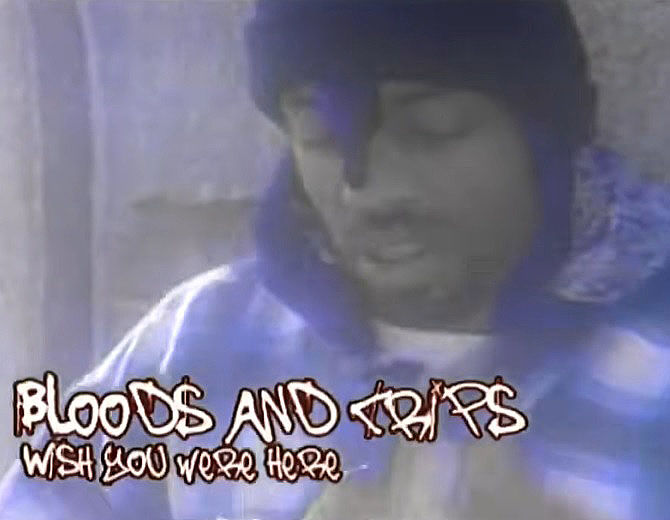
I also liked their last album, Bangin’ on Wax 2... The Saga Continues (1994), on which was the song “Wish You Were Here”, featuring a sample of the Four Tops’ “Still Water (Love)” (1970), as the Bloods & Crips expressed negative, but healthy grief, bereavement, and mourning.
The chorus states, “I wish you were here; how I wish you were here.” Per the American Psychological Association, a wish is simply defined as “any desire or longing.” Herein, I’ll provide a Rational Emotive Behavior Therapy (REBT) lesson on wishing that results in sadness.
Now, REBT uses the ABC model to illustrate that when an undesirable Action occurs and you Believe an unhelpful narrative about the event, it’s your unfavorable assumption, not the event itself, that causes an unpleasant Consequence. This is known as distress or disturbance.
Noteworthy, with virtually any undesirable Action that occurs, it’s your unfavorable Beliefs which cause unpleasant distress or disturbance (Consequence). Given this framing of self-distress and self-disturbance, it’s worth noting that one REBT source states (page 71):
REBT conceptualizes [distress] as healthy even though it is intense. Other approaches to therapy have as their goal the reduction of the intensity of negative emotions. They take this position because they do not keenly differentiate between healthy negative emotions (distress) and unhealthy negative emotions (disturbance).
Now, REBT keenly distinguishes between healthy distress and unhealthy disturbance. Healthy distress stems from your rational beliefs about a negative activating event [Action], whilst disturbance stems from your irrational beliefs about the same event.
Complete elimination of distress is highly unlikely in an impermanent and uncertain world, wherein people conceptually suffer, struggle, and battle with, or merely experience hardship. Still, individuals often make matters worse for themselves by disturbing about such instances.
In particular, there are four predominate irrational beliefs which people often use to distress or disturb themselves: global evaluations, low frustration tolerance, awfulizing, and demandingness. When contemplating these unproductive scripts, think of the acronym GLAD.
Additionally, from a psychological standpoint, people distress or disturb themselves using a Belief-Consequence (B-C) connection. Of course, this isn’t to suggest that in the context of the naturalistic or physical world there is no Action-Consequence (A-C) connection.
From an A-C view, a number of mis carnales were incarcerated, some died, and I’ve lost contact with all of them (Action), so there’s no longer a bond between us (Consequence). Still, from a B-C perspective, any sadness I may experience is caused by what I tell myself about such loss.
I’ve lost the bond with mis carnales (Action), I could hypothetically Believe, “Life is worthless without them [G], and I can’t stand it [L], because it’s awful [A], as carnales should always remain in my life [D],” and then endure negative, but unhealthy sadness (Consequence).
Addressing how people upset themselves with unhelpful attitudes, the ABC model incorporates Disputation of unproductive philosophies of life in order to explore Effective new beliefs. Whereas rigid beliefs cause self-disturbance, flexible beliefs result in an un-disturbed condition.
Favorably, since practicing REBT, I’ve adopted the Effective belief, “Although I wish that mis carnales were here, I haven’t had contact with them since high school, so they’ve been out of my life far longer than they were in it,” as I experience negative, but healthy sadness (Consequence).
Likewise, REBT uses unconditional acceptance (UA) to relieve self-induced suffering. This is accomplished through use of unconditional self-acceptance (USA), unconditional other-acceptance (UOA), and unconditional life-acceptance (ULA).
Whereas the ABC model is a scientific approach to wellness, UA serves as a philosophical method for un-disturbing yourself. I view the former as an abortive approach to disturbance and the latter as a preventative method. Of course, not all REBT practitioners use the same style as I.
With my approach to REBT, I incorporate author Stephen Covey’s concepts regarding the circles of control, influence, and concern, as well as an area of no concern. UA maps onto the circle of control (USA), circle of influence (UOA), and circle of concern and area of no concern (ULA).
The circle of control encompasses only oneself, the circle of influence encapsulates elements which may be subject to one’s sway, the circle of concern engrosses most matters one can imagine, and the area of no concern relates to all content which isn’t yet imagined.
Regarding my circle of control and USA, I recognize that I control my reaction to the loss of mis carnales. Concerning my circle of influence and UOA, I acknowledge that mis carnales followed their own paths, as people often come in and out of each other’s lives in such a manner.
Relating to my circle of concern and ULA, I admit that just as death is another side of the proverbial coin of life, so too are the limits of kinship. On one flip of the coin, people are here. On the other flip, they’re gone. Such is living, connection, parting, and death.
As for my area of no concern, an imaginary realm in which no carnales are incarcerated, die, or lose contact with one another, that’s not the world in which I live. That’s the dimension in which all wishes come true, which represents something with which I’m simply not concerned.
Now, I offer this psychoeducational lesson on REBT to you. While there’s nothing inherently good or bad, right or wrong with wishing that those you’ve lost were still here, the Consequences of your Beliefs – whether rational or irrational – may represent healthy or unhealthy sadness.
To all the Crips, Bloods, and Sureños I’ve lost along the way, rest easy. I won’t shout you out by name, because I’m aware that the feds and spooks may be monitoring my blog, and I don’t need their attention through use of your legal or street names. You’re gone, but not forgotten. One.
If you’re looking for a provider who tries to work to help understand how thinking impacts physical, mental, emotional, and behavioral elements of your life—helping you to sharpen your critical thinking skills, I invite you to reach out today by using the contact widget on my website.
As the world’s foremost hip hop-influenced REBT psychotherapist, I’m pleased to try to help people with an assortment of issues from anger (hostility, rage, and aggression) to relational issues, adjustment matters, trauma experience, justice involvement, attention-deficit hyperactivity disorder, anxiety and depression, and other mood or personality-related matters.
At Hollings Therapy, LLC, serving all of Texas, I aim to treat clients with dignity and respect while offering a multi-lensed approach to the practice of psychotherapy and life coaching. My mission includes: Prioritizing the cognitive and emotive needs of clients, an overall reduction in client suffering, and supporting sustainable growth for the clients I serve. Rather than simply trying to help you to feel better, I want to try to help you get better!
Deric Hollings, LPC, LCSW
References:
APA Dictionary of Psychology. (2018, April 19). Wish. American Psychological Association. Retrieved from https://dictionary.apa.org/wish
Dryden, W. and Neenan, M. (2006). Rational emotive behaviour therapy: 100 key points and techniques. Routledge. Retrieved from https://img1.wsimg.com/blobby/go/4b0e2552-2a18-4998-b44f-3a993148f7ac/downloads/REBT%202.pdf?ver=1627365797554
Four Tops. (2019, January 9). Still Water (Love) [Video]. YouTube. Retrieved from https://youtu.be/GjwaNA_mPV8?si=ForghvSP6256RxD6
Hoezay. (2007, August 3). Carnal. Urban Dictionary. Retrieved from https://www.urbandictionary.com/define.php?term=carnal
Hollings, D. (2024, August 22). A damn owl, homie. Hollings Therapy, LLC. Retrieved from https://www.hollingstherapy.com/post/a-damn-owl-homie
Hollings, D. (2026, June 16). A fountain of goodness: Subjective and objective views. Hollings Therapy, LLC. Retrieved from https://www.hollingstherapy.com/post/a-fountain-of-goodness-subjective-and-objective-views
Hollings, D. (2024, May 22). A philosophical approach to mental health. Hollings Therapy, LLC. Retrieved from https://www.hollingstherapy.com/post/a-philosophical-approach-to-mental-health
Hollings, D. (2025, August 26). A preventative approach to self-disturbance. Hollings Therapy, LLC. Retrieved from https://www.hollingstherapy.com/post/a-preventative-approach-to-self-disturbance
Hollings, D. (2024, May 24). A scientific approach to mental health. Hollings Therapy, LLC. Retrieved from https://www.hollingstherapy.com/post/a-scientific-approach-to-mental-health
Hollings, D. (2025, October 19). Adhering to invisible scripts. Hollings Therapy, LLC. Retrieved from https://www.hollingstherapy.com/post/adhering-to-invisible-scripts
Hollings, D. (2025, August 26). An abortive approach to self-disturbance. Hollings Therapy, LLC. Retrieved from https://www.hollingstherapy.com/post/an-abortive-approach-to-self-disturbance
Hollings, D. (2024, November 15). Assumptions. Hollings Therapy, LLC. Retrieved from https://www.hollingstherapy.com/post/assumptions
Hollings, D. (2026, September 8). Attention: Changing the way you respond to a situation makes a difference. Hollings Therapy, LLC. Retrieved from https://www.hollingstherapy.com/post/attention-changing-the-way-you-respond-to-a-situation-makes-a-difference
Hollings, D. (2024, August 7). Awfulizing. Hollings Therapy, LLC. Retrieved from https://www.hollingstherapy.com/post/awfulizing
Hollings, D. (2024, July 15). Bullying. Hollings Therapy, LLC. Retrieved from https://www.hollingstherapy.com/post/bullying
Hollings, D. (2022, May 17). Circle of concern. Hollings Therapy, LLC. Retrieved from https://www.hollingstherapy.com/post/circle-of-concern
Hollings, D. (2024, July 11). Concern and no concern. Hollings Therapy, LLC. Retrieved from https://www.hollingstherapy.com/post/concern-and-no-concern
Hollings, D. (2023, April 22). Control. Hollings Therapy, LLC. Retrieved from https://www.hollingstherapy.com/post/control
Hollings, D. (2024, October 27). Correlation does not imply causation. Hollings Therapy, LLC. Retrieved from https://www.hollingstherapy.com/post/correlation-does-not-imply-causation
Hollings, D. (2022, October 31). Demandingness. Hollings Therapy, LLC. Retrieved from https://www.hollingstherapy.com/post/demandingness
Hollings, D. (2024, October 21). Desire. Hollings Therapy, LLC. Retrieved from https://www.hollingstherapy.com/post/desire
Hollings, D. (2022, March 15). Disclaimer. Hollings Therapy, LLC. Retrieved from https://www.hollingstherapy.com/post/disclaimer
Hollings, D. (2025, March 12). Distress vs. disturbance. Hollings Therapy, LLC. Retrieved from https://www.hollingstherapy.com/post/distress-vs-disturbance
Hollings, D. (2025, August 19). Doing right or wrong, as they see it. Hollings Therapy, LLC. Retrieved from https://www.hollingstherapy.com/post/doing-right-or-wrong-as-they-see-it
Hollings, D. (2026, June 23). Don’t nobody else make me feel like: Sadness. Hollings Therapy, LLC. Retrieved from https://www.hollingstherapy.com/post/don-t-nobody-else-make-me-feel-like-sadness
Hollings, D. (2026, August 12). Estrangement and negative, but healthy grief, bereavement, and mourning. Hollings Therapy, LLC. Retrieved from https://www.hollingstherapy.com/post/estrangement-and-negative-but-healty-grief-bereavement-and-mourning
Hollings, D. (2023, September 8). Fair use. Hollings Therapy, LLC. Retrieved from https://www.hollingstherapy.com/post/fair-use
Hollings, D. (2024, May 17). Feeling better vs. getting better. Hollings Therapy, LLC. Retrieved from https://www.hollingstherapy.com/post/feeling-better-vs-getting-better-1
Hollings, D. (2026, February 13). Five, four, three… beliefs. Hollings Therapy, LLC. Retrieved from https://www.hollingstherapy.com/post/five-four-three-beliefs
Hollings, D. (2026, September 16). Gang sets and other quasi gang-related activity: Indoctrination and conditioning. Hollings Therapy, LLC. Retrieved from https://www.hollingstherapy.com/post/gang-sets-and-other-quasi-gang-related-activity-indoctrination-and-conditioning
Hollings, D. (2023, October 12). Get better. Hollings Therapy, LLC. Retrieved from https://www.hollingstherapy.com/post/get-better
Hollings, D. (2023, September 13). Global evaluations. Hollings Therapy, LLC. Retrieved from https://www.hollingstherapy.com/post/global-evaluations
Hollings, D. (2023, September 13). Global evaluations. Hollings Therapy, LLC. Retrieved from https://www.hollingstherapy.com/post/global-evaluations
Hollings, D. (2024, April 13). Goals. Hollings Therapy, LLC. Retrieved from https://www.hollingstherapy.com/post/goals
Hollings, D. (2026, September 16). Healthfully negative vs. unhealthfully negative reactions. Hollings Therapy, LLC. Retrieved from https://www.hollingstherapy.com/post/healthfully-negative-vs-unhealthfully-negative-reactions
Hollings, D. (2024, August 9). Healthy concern. Hollings Therapy, LLC. Retrieved from https://www.hollingstherapy.com/post/healthy-concern
Hollings, D. (2026, October 6). Hey, young world, the world isn’t good or bad. Hollings Therapy, LLC. Retrieved from https://www.hollingstherapy.com/post/hey-young-world-the-world-isn-t-good-or-bad
Hollings, D. (2026, June 6). High and dry: Steering a proverbial ship around unhelpful assumptions. Hollings Therapy, LLC. Retrieved from https://www.hollingstherapy.com/post/high-and-dry-steering-a-proverbial-ship-around-unhelpful-assumptions
Hollings, D. (n.d.). Hollings Therapy, LLC [Official website]. Hollings Therapy, LLC. Retrieved from https://www.hollingstherapy.com/
Hollings, D. (2026, September 27). Imagination: Rational emotive imagery. Hollings Therapy, LLC. Retrieved from https://www.hollingstherapy.com/post/imagination-rational-emotive-imagery
Hollings, D. (2024, October 21). Impermanence and uncertainty. Hollings Therapy, LLC. Retrieved from https://www.hollingstherapy.com/post/impermanence-and-uncertainty
Hollings, D. (2024, February 14). Insufferable vs. undesirable. Hollings Therapy, LLC. Retrieved from https://www.hollingstherapy.com/post/insufferable-vs-undesirable
Hollings, D. (2023, September 19). Life coaching. Hollings Therapy, LLC. Retrieved from https://www.hollingstherapy.com/post/life-coaching
Hollings, D. (2022, December 2). Low frustration tolerance. Hollings Therapy, LLC. Retrieved from https://www.hollingstherapy.com/post/low-frustration-tolerance
Hollings, D. (2024, September 27). My attitude. Hollings Therapy, LLC. Retrieved from https://www.hollingstherapy.com/post/my-attitude
Hollings, D. (2025, August 2). My philosophy. Hollings Therapy, LLC. Retrieved from https://www.hollingstherapy.com/post/my-philosophy
Hollings, D. (2026, June 9). No trust: Dishonesty. Hollings Therapy, LLC. Retrieved from https://www.hollingstherapy.com/post/no-trust-dishonesty
Hollings, D. (2023, April 24). On truth. Hollings Therapy, LLC. Retrieved from https://www.hollingstherapy.com/post/on-truth
Hollings, D. (2025, June 17). One. Hollings Therapy, LLC. Retrieved from https://www.hollingstherapy.com/post/__one
Hollings, D. (2024, July 20). Perspective shift. Hollings Therapy, LLC. Retrieved from https://www.hollingstherapy.com/post/perspective-shift
Hollings, D. (2024, January 31). Perverse qualifiers. Hollings Therapy, LLC. Retrieved from https://www.hollingstherapy.com/post/perverse-qualifiers
Hollings, D. (2024, January 1). Psychoeducation. Hollings Therapy, LLC. Retrieved from https://www.hollingstherapy.com/post/psychoeducation
Hollings, D. (2024, May 5). Psychotherapist. Hollings Therapy, LLC. Retrieved from https://www.hollingstherapy.com/post/psychotherapist
Hollings, D. (2025, August 13). Rational versus irrational thoughts and beliefs. Hollings Therapy, LLC. Retrieved from https://www.hollingstherapy.com/post/rational-versus-irrational-thoughts-and-beliefs
Hollings, D. (2024, January 1). Rational vs. irrational. Hollings Therapy, LLC. Retrieved from https://www.hollingstherapy.com/post/rational-vs-irrational
Hollings, D. (2024, July 18). REBT flexibility. Hollings Therapy, LLC. Retrieved from https://www.hollingstherapy.com/post/rebt-flexibility
Hollings, D. (2023, February 17). Revisiting the circle of control. Hollings Therapy, LLC. Retrieved from https://www.hollingstherapy.com/post/revisiting-the-circle-of-control
Hollings, D. (2024, January 4). Rigid vs. rigorous. Hollings Therapy, LLC. Retrieved from https://www.hollingstherapy.com/post/rigid-vs-rigorous
Hollings, D. (2025, October 9). Self-awareness, self-examination, and self-determination. Hollings Therapy, LLC. Retrieved from https://www.hollingstherapy.com/post/self-awareness-self-examination-and-self-determination
Hollings, D. (2026, July 7). Self-distress and distress tolerance. Hollings Therapy, LLC. Retrieved from https://www.hollingstherapy.com/post/self-distress-and-distress-tolerance
Hollings, D. (2022, November 1). Self-disturbance. Hollings Therapy, LLC. Retrieved from https://www.hollingstherapy.com/post/self-disturbance
Hollings, D. (2026, April 21). Self-upset. Hollings Therapy, LLC. Retrieved from https://www.hollingstherapy.com/post/self-upset
Hollings, D. (2025, January 5). Spooky business. Hollings Therapy, LLC. Retrieved from https://www.hollingstherapy.com/post/spooky-business
Hollings, D. (2024, February 27). Suffering, struggling, and battling vs. experiencing. Hollings Therapy, LLC. Retrieved from https://www.hollingstherapy.com/post/suffering-struggling-and-battling-vs-experiencing
Hollings, D. (2022, December 23). The A-C connection. Hollings Therapy, LLC. Retrieved from https://www.hollingstherapy.com/post/the-a-c-connection
Hollings, D. (2022, December 25). The B-C connection. Hollings Therapy, LLC. Retrieved from https://www.hollingstherapy.com/post/the-b-c-connection
Hollings, D. (2022, November 2). The critical A. Hollings Therapy, LLC. Retrieved from https://www.hollingstherapy.com/post/the-critical-a
Hollings, D. (2025, April 15). This cake smells unpleasant. Hollings Therapy, LLC. Retrieved from https://www.hollingstherapy.com/post/this-cake-smells-unpleasant
Hollings, D. (2026, June 5). To offend and endure offense: Você tem chulé. Hollings Therapy, LLC. Retrieved from https://www.hollingstherapy.com/post/to-offend-and-endure-offense-você-tem-chulé
Hollings, D. (2025, February 28). To try is my goal. Hollings Therapy, LLC. Retrieved from https://www.hollingstherapy.com/post/to-try-is-my-goal
Hollings, D. (2025, January 9). Traditional ABC model. Hollings Therapy, LLC. Retrieved from https://www.hollingstherapy.com/post/traditional-abc-model
Hollings, D. (2024, October 20). Unconditional acceptance redux. Hollings Therapy, LLC. Retrieved from https://www.hollingstherapy.com/post/unconditional-acceptance-redux
Hollings, D. (2023, March 11). Unconditional life-acceptance. Hollings Therapy, LLC. Retrieved from https://www.hollingstherapy.com/post/unconditional-life-acceptance
Hollings, D. (2023, February 25). Unconditional other-acceptance. Hollings Therapy, LLC. Retrieved from https://www.hollingstherapy.com/post/unconditional-other-acceptance
Hollings, D. (2023, March 1). Unconditional self-acceptance. Hollings Therapy, LLC. Retrieved from https://www.hollingstherapy.com/post/unconditional-self-acceptance
Hollings, D. (2024, March 18). Unhealthy vs. healthy negative emotions. Hollings Therapy, LLC. Retrieved from https://www.hollingstherapy.com/post/unhealthy-vs-healthy-negative-emotions
Hollings, D. (2024, October 26). Unhelpful expectations. Hollings Therapy, LLC. Retrieved from https://www.hollingstherapy.com/post/unhelpful-expectations
Hollings, D. (2023, May 3). Want vs. need. Hollings Therapy, LLC. Retrieved from https://www.hollingstherapy.com/post/want-vs-need
Hollings, D. (2025, July 18). We decide whether to label something good or bad. Hollings Therapy, LLC. Retrieved from https://www.hollingstherapy.com/post/ we-decide-whether-to-label-something-good-or-bad
Hollings, D. (2024, September 29). Well, well, well. Hollings Therapy, LLC. Retrieved from https://www.hollingstherapy.com/post/well-well-well
Hollings, D. (2024, April 17). Wishes, dreams, and goals. Hollings Therapy, LLC. Retrieved from https://www.hollingstherapy.com/post/wishes-dreams-and-goals
Hollings, D. (2026, March 26). You’ll have suffered twice. Hollings Therapy, LLC. Retrieved from https://www.hollingstherapy.com/post/you-ll-have-suffered-twice
Kuzko. (2004, November 25). Carnales. Urban Dictionary. Retrieved from https://www.urbandictionary.com/define.php?term=carnales
Mashetee88. (2015, September 27). Dry snitching. Urban Dictionary. Retrieved from https://www.urbandictionary.com/define.php?term=dry+snitching
Rptboyybillz. (2009, October 20). Bloods and Crips I Wish You Were Here HD version [Image; video]. YouTube. Retrieved from https://youtu.be/DZjUDMkqKd4?si=kArp3VJb8SHvi75F
Totesdumpkfe. (2021, May 12). Carnal. Urban Dictionary. Retrieved from https://www.urbandictionary.com/define.php?term=carnal
Wikipedia. (n.d.). Assault and battery. Retrieved from https://en.wikipedia.org/wiki/Assault_and_battery
Wikipedia. (n.d.). Bangin’ on Wax. Retrieved from https://en.wikipedia.org/wiki/Bangin'_on_Wax
Wikipedia. (n.d.). Bangin’ on Wax 2... The Saga Continues. Retrieved from https://en.wikipedia.org/wiki/Bangin'_on_Wax_2..._The_Saga_Continues
Wikipedia. (n.d.). Bloods. Retrieved from https://en.wikipedia.org/wiki/Bloods
Wikipedia. (n.d.). Bloods & Crips. Retrieved from https://en.wikipedia.org/wiki/Bloods_%26_Crips
Wikipedia. (n.d.). Cassette Tape. Retrieved from https://en.wikipedia.org/wiki/Cassette_tape
Wikipedia. (n.d.). Crips. Retrieved from https://en.wikipedia.org/wiki/Crips
Wikipedia. (n.d.). Four Tops. Retrieved from https://en.wikipedia.org/wiki/Four_Tops
Wikipedia. (n.d.). Stephen Covey. Retrieved from https://en.wikipedia.org/wiki/Stephen_Covey
Wikipedia. (n.d.). Sureños. Retrieved from https://en.wikipedia.org/wiki/Sure%C3%B1os


