I Don't Care: Ambivalence vs. Apathy

Realizing that the Electronic Daisy Carnival (EDC) recently took place in its home of Las Vegas, Nevada, I took to YouTube so that I could watch and listen to DJ sets from the largest electronic dance music (EDM) festival in North America, as I saw one of my favorite modern DJs perform.
During his DJ set, French EDM producer and DJ going by the name of I Hate Models spun the track “4 by 4 Beats (I Don’t Care)” by Belgian EDM producer and DJ going by the name of Coone. About a four-four time signature (i.e., 4x4, 4/4, four-by-four, etc.), the lyrics state:
[Chorus]
I remember the day I first heard electronic music
My heart got hooked on four-by-four beats
I don’t care if it’s Frenchtek
I don’t care if it’s hardstyle
I don’t care if it’s hardcore
I don’t care if it’s old school or jump, jump, jump
[Build]
(four-four-by-four-by beats)
(four-by-four beats)
Four-four-by-four-by beats
Four-by-four beats
Four-four-by-four-by beats
I don’t care if it’s old-school or jump, jump, four-by, jump
[Drop]
Drop it, drop it
We don’t give a fu— [fuck]
My heart got hooked on four-by-four beats
Four-four-by-four-by beats
I don’t care if it’s old school or jump, jump, jump
Drop it, drop it, oh my—
My heart got hooked on four-by-four beats
Regarding the phrase “I don’t care” (“IDC”), one source states it “indicates that the speaker has no interest or emotional investment in the topic at hand.” Used in this way, the vocalist on “4 by 4 Beats (I Don’t Care)” expresses disinterest regarding a preference for various EDM styles.
In the earlier days of my professional care for mental, emotional, and behavioral health (collectively “mental health”), I sometimes confused myself about IDC narratives by thinking they related to both ambivalence and apathy. However, they aren’t necessarily synonymous.
Without consulting your preferred online search engine or artificial intelligence app, can you draw a meaningful distinction between these two terms? If not, then I encourage you to keep reading this post. The American Psychological Association (APA) thusly defines ambivalence:
1. the simultaneous existence of contradictory feelings and attitudes, such as pleasantness and unpleasantness or friendliness and hostility, toward the same person, object, event, or situation.
Eugen Bleuler, who first defined ambivalence in a psychological sense and referred to it as affective ambivalence, regarded extreme ambivalence, such as an individual expressing great love for their mother while also asking how to kill her, as a major symptom of schizophrenia.
2. uncertainty or indecisiveness about a course of action. —ambivalent adj.
One source adds, “Although attitudes tend to guide attitude-relevant behavior, those held with ambivalence tend to do so to a lesser extent. The less certain an individual is in their attitude, the more impressionable it becomes, hence making future actions less predictable and/or less decisive.”
When professionally caring for the mental health of my clients, it isn’t unusual for me to encounter ambivalence. For instance, I may hold an attitude (summary evaluation or appraisal of an object of thought or belief) about what I observed when watching EDC DJ sets on YouTube.
If my attitude has both positive and negative components, then I’m experiencing ambivalence. Imagine that while watching EDC attendees mainly standing around as I Hate Models conducted his set, rather than dancing, I experienced both joy (positive) and disappointment (negative).
In particular, let’s say that I told myself, “I adore I Hate Models’ electronic body music [EBM] set at EDC this year, but it appears as if people in his audience don’t appreciate the energetic offering he’s given them.” That’s precisely the type of thought that creates ambivalence.
Now, suppose I moved from description (thought) to prescription (belief). Depending on how I used the belief, I may experience unpleasant consequences. Before delving into the matter of apathy, a psychoeducational lesson on Rational Emotive Behavior Therapy (REBT) is in order.
REBT uses the ABC model to illustrate that when an undesirable Action occurs and you Believe an unhelpful narrative about the event, it’s your unfavorable assumption, not the occurrence itself, that causes an unpleasant Consequence. This is known as distress or disturbance.
Noteworthy, with virtually any undesirable Action that occurs, it’s your unfavorable Beliefs which cause unpleasant distress or disturbance (Consequence). Given this framing of self-distress and self-disturbance, it’s worth noting that one REBT source states (page 71):
REBT conceptualizes [distress] as healthy even though it is intense. Other approaches to therapy have as their goal the reduction of the intensity of negative emotions. They take this position because they do not keenly differentiate between healthy negative emotions (distress) and unhealthy negative emotions (disturbance).
Now, REBT keenly distinguishes between healthy distress and unhealthy disturbance. Healthy distress stems from your rational beliefs about a negative activating event [Action], whilst disturbance stems from your irrational beliefs about the same event.
Complete elimination of distress is highly unlikely in an impermanent and uncertain world wherein people conceptually suffer, struggle, and battle with, or merely experience hardship. Still, individuals often make matters worse for themselves by disturbing about such instances.
In particular, there are four predominate irrational beliefs which people often use to distress or disturb themselves: global evaluations, low frustration tolerance, awfulizing, and demandingness. When contemplating these unproductive scripts, think of the acronym GLAD.
Additionally, from a psychological standpoint, people distress or disturb themselves using a Belief-Consequence (B-C) connection. Of course, this isn’t to suggest that in the context of the naturalistic or physical world there is no Action-Consequence (A-C) connection.
From an A-C view, I Hate Models spun EBM (Action) and EDC attendees mostly stood motionless while using their smartphones (Consequence). My observation of this experience isn’t what would cause an unpleasant reaction. Rather, the B-C connection does that.
Hypothetically, I observe a relatively motionless I Hate Models audience (Action) and Believe, “These people are worthless [G], and it’s intolerable that they’d stand around on their phones [L], because it’s terrible not to live in the moment [A], as they absolutely should be doing [D]!”
With this self-narrative, more thoughts would enter my mind (cognitive), I’d feel negative and unhealthy anger (emotion), I may even feel tightness in my chest (sensation), and I could abruptly turn off the YouTube video (behavior)—all of which are unpleasant Consequences.
Addressing how people upset themselves with unhelpful attitudes, the ABC model incorporates Disputation of unproductive philosophies of life in order to explore Effective new beliefs. Whereas rigid beliefs cause self-disturbance, flexible beliefs result in an un-disturbed condition.
Imagine that instead of the aforementioned negative and unhealthy self-disturbed outcome, I instead used an attitude that resulted in negative and healthy self-distress. “I hopefully anticipated a crowd that would dance,” I’d tell myself, “but people may do as they please.”
Whereas the self-disturbed condition of anger is created by an inflexible attitude, the self-distressed experience of disappointment results from a flexible philosophy of life. Noteworthy, both disturbance and distress are negative, though one is healthy and the other is unhealthy.
Let’s take the B-C connection a little further, as I invite you to consider a favorable Consequence of my hypothetical Belief. Suppose that I told myself, “I’m grateful to have an opportunity to see I Hate Models perform, and I dig the track ‘4 by 4 Beats (I Don’t Care)’ quite a bit!”
Just as rigid personal scripts lead to negative disturbance, and malleable attitudes result in negative distress, one’s supple and optimistic perspective produces a positive and healthy effect, such as joy. Thus, ambivalence occurs if I experience both a positive and negative outcome.
As an example, I could Believe, “I hopefully anticipated a crowd that would dance, but people may do as they please. Besides, I’m grateful to have an opportunity to see I Hate Models perform, and I dig the track ‘4 by 4 Beats (I Don’t Care)’ quite a bit!”
The important takeaway is that irrespective of outcomes which are positive, negative, or even neutral (e.g., indifference), we cause these reactions by the attitudes we maintain. Now, I invite you to contemplate that I stated in a blogpost entitled Apathy:
[A]ccording to the American Psychological Association (APA), apathy is thusly defined:
[L]ack of motivation or goal-directed behavior and indifference to one’s surroundings. Apathy is commonly associated with severe depression or schizophrenia, but it also is a major behavioral symptom in Alzheimer’s disease, Parkinson’s disease, and other neurodegenerative disorders.
Essentially, apathy relates to indifference, though the term has a connotation in regard to clinical diagnoses. Noteworthy, the aforementioned definition of indifference references the matter of “interest.” According to the APA, this term is thusly defined:
[A]n attitude characterized by a need or desire to give selective attention to something that is significant to the individual, such as an activity, goal, or research area.
Notably, pertaining to the practice of REBT, I stated in a blogpost entitled Interests and Goals, “Whereas an interest may defined as the state of wanting to learn about something, a goal is the end toward which effort is directed.” Still, one who is apathetic may not maintain interests.
Therefore, without interest from which goals stem, a person experiencing apathy may lack desire (a form of craving in relation to pleasure derived from possessing something such as the ability to improve one’s own level of functioning and quality of life). Of note, one source adds:
Apathy, also referred to as indifference, is a lack of feeling, emotion, interest, and/or concern about something. It is a state of indifference, and/or the suppression of emotions such as concern, excitement, motivation, or passion. An apathetic individual has an absence of interest in or concern about emotional, social, spiritual, philosophical, virtual, or physical life and the world.
Apathy can also be defined as a person’s lack of goal orientation. Apathy falls in the less extreme spectrum of diminished motivation, with abulia in the middle and akinetic mutism being more extreme than both apathy and abulia.
The apathetic may lack a sense of purpose, worth, or meaning in their life. People with severe apathy tend to have a lower quality of life and are at a higher risk for mortality and early institutionalization. They may also exhibit insensibility or sluggishness.
Without an interest (i.e., desire) to form a goal (i.e., the end toward which effort is directed), an apathetic person may further lack motivation (a person’s willingness to exert physical or mental effort in pursuit of a goal or outcome) to practice REBT on a daily basis, as I recommend.
Thus, working with the apathetic may begin with exploration of purpose (i.e., what one does) and meaning (i.e., worth derived from fulfilment of one’s purpose). Still, as one source states, “There’s no go-to treatment for apathy,” as some people are simply indifferent toward REBT.
As I conceptualize apathy, there are neutral and negative forms of this condition. As an example, on “4 by 4 Beats (I Don’t Care)”, the vocalist uses an IDC attitude regarding various styles of EDM. Specifically, he states, “We don’t give a fu—my heart got hooked on four-by-four beats.”
Apparently, whether one plays Frenchtek, hardstyle, hardcore, old school, or jumpstyle, the vocalist neutrally doesn’t care, as long as there’s a four-by-four time signature. This is an instance of apathy rather than ambivalence.
Alternatively, if I saw client X who stated, “I don’t give a fuck about living anymore, so I’m going to attempt suicide,” then this is an example of negative apathy. With this individual, in addition to the ABC model, I’d practice an REBT technique.
For clarity, REBT uses unconditional acceptance (UA) to relieve self-induced suffering. This is accomplished through use of unconditional self-acceptance (USA), unconditional other-acceptance (UOA), and unconditional life-acceptance (ULA).
Whereas the ABC model is a scientific approach to wellness, UA serves as a philosophical method for un-disturbing yourself. I view the former as an abortive approach to disturbance and the latter as a preventative method. Of course, not all REBT practitioners use the same style as I.
With my approach to REBT, I incorporate author Stephen Covey’s concepts regarding the circles of control, influence, and concern, as well as an area of no concern. UA maps onto the circle of control (USA), circle of influence (UOA), and circle of concern and area of no concern (ULA).
The circle of control encompasses only oneself, the circle of influence encapsulates elements which may be subject to one’s sway, the circle of concern engrosses most matters one can imagine, and the area of no concern relates to all content which isn’t yet imagined.
Regarding client X’s circle of control and USA, this person could accept that an individual does has control over unpleasant reactions in life. This includes whether or not one will experience ambivalence or apathy which are conditions directly caused by one’s own beliefs.
Concerning client X’s circle of influence and UOA, this individual may admit that one has very little influence over most matters in life. One may try to persuade others for a more satisfying experience, though one is more likely to simply experience negative and healthy distress.
Pertaining to client X’s circle of concern and ULA, this person would do well to accept—without unhelpful conditions—that virtually everything outside of oneself is unable to be controlled or influenced, as focusing on what one can control is wise (i.e., whether or not to attempt suicide).
As for the area of no concern—related to a realm in which imaginary matters, such as whether or not an avatar of client X in a diverging timeline is a toaster that contemplates throwing itself into a tub of water—there are enough problems in this life on which to concentrate, as is.
With hope, you now understand the distinction between ambivalence and apathy. Then again, you may not care about this topic any more than you’re concerned with whether or not EDC-goers were relatively motionless during I Hate Models’ set. If this is the case, then I don’t care.
If you’re looking for a provider who tries to work to help understand how thinking impacts physical, mental, emotional, and behavioral elements of your life—helping you to sharpen your critical thinking skills, I invite you to reach out today by using the contact widget on my website.
As the world’s foremost EDM-influenced REBT psychotherapist—promoting content related to EDM, I’m pleased to try to help people with an assortment of issues from anger (hostility, rage, and aggression) to relational issues, adjustment matters, trauma experience, justice involvement, attention-deficit hyperactivity disorder, anxiety and depression, and other mood or personality-related matters.
At Hollings Therapy, LLC, serving all of Texas, I aim to treat clients with dignity and respect while offering a multi-lensed approach to the practice of psychotherapy and life coaching. My mission includes: Prioritizing the cognitive and emotive needs of clients, an overall reduction in client suffering, and supporting sustainable growth for the clients I serve. Rather than simply trying to help you to feel better, I want to try to help you get better!
Deric Hollings, LPC, LCSW
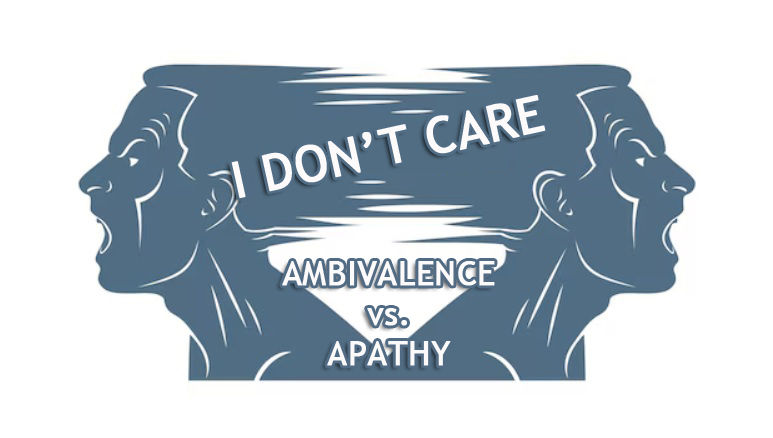
Photo credit (edited), Designed by Magnific, fair use
References:
APA Dictionary of Psychology. (2023, November 15). Ambivalence. American Psychological Association. Retrieved from https://dictionary.apa.org/ambivalence
APA Dictionary of Psychology. (2018, April 19). Apathy. American Psychological Association. Retrieved from https://dictionary.apa.org/apathy
APA Dictionary of Psychology. (2018, April 19). Interest. American Psychological Association. Retrieved from https://dictionary.apa.org/interest
APA Dictionary of Psychology. (2018, April 19). Pleasantness. American Psychological Association. Retrieved from https://dictionary.apa.org/pleasantness
APA Dictionary of Psychology. (2023, November 15). Schizophrenia. American Psychological Association. Retrieved from https://dictionary.apa.org/schizophrenia
APA Dictionary of Psychology. (2018, April 19). Suppression. American Psychological Association. Retrieved from https://dictionary.apa.org/suppression
Cleveland Clinic. (2023, March 16). Apathy. Retrieved from https://my.clevelandclinic.org/health/symptoms/24824-apathy
Destination EDM! (2026, May 30). I Hate Models full set EDC Las Vegas 2026 [Video]. YouTube. Retrieved from https://youtu.be/N8wcyuIfac4?si=AuX5GhurR60tdQPZ
Dirty Workz and Coone. (2025, October 3). Coone - 4 by 4 Beats (I Don’t Care) (Official hardstyle video) [Video]. YouTube. Retrieved from https://youtu.be/uYMsz1-2FNs?si=deyhzAqoYDcBxOke
Dryden, W. and Neenan, M. (2006). Rational emotive behaviour therapy: 100 key points and techniques. Routledge. Retrieved from https://img1.wsimg.com/blobby/go/4b0e2552-2a18-4998-b44f-3a993148f7ac/downloads/REBT%202.pdf?ver=1627365797554
Hollings, D. (2025, December 1). A diagnosis is a form of hypothesis. Hollings Therapy, LLC. Retrieved from https://www.hollingstherapy.com/post/a-diagnosis-is-a-form-of-hypothesis
Hollings, D. (2026, February 5). A matter of concern: Loss of a new start. Hollings Therapy, LLC. Retrieved from https://www.hollingstherapy.com/post/a-matter-of-concern-loss-of-a-new-start
Hollings, D. (2024, May 22). A philosophical approach to mental health. Hollings Therapy, LLC. Retrieved from https://www.hollingstherapy.com/post/a-philosophical-approach-to-mental-health
Hollings, D. (2025, August 26). A preventative approach to self-disturbance. Hollings Therapy, LLC. Retrieved from https://www.hollingstherapy.com/post/a-preventative-approach-to-self-disturbance
Hollings, D. (2024, May 24). A scientific approach to mental health. Hollings Therapy, LLC. Retrieved from https://www.hollingstherapy.com/post/a-scientific-approach-to-mental-health
Hollings, D. (2024, July 9). Absolutistic should beliefs. Hollings Therapy, LLC. Retrieved from https://www.hollingstherapy.com/post/absolutistic-should-beliefs
Hollings, D. (2023, September 13). Acceptance. Hollings Therapy, LLC. Retrieved from https://www.hollingstherapy.com/post/acceptance
Hollings, D. (2026, February 21). Accepting unconditionally: Good luck, have fun, don’t die. Hollings Therapy, LLC. Retrieved from https://www.hollingstherapy.com/post/accepting-unconditionally-good-luck-have-fun-don-t-die
Hollings, D. (2026, February 8). Adaptive and maladaptive emotions and behavior. Hollings Therapy, LLC. Retrieved from https://www.hollingstherapy.com/post/adaptive-and-maladaptive-emotions-and-behavior
Hollings, D. (2025, October 19). Adhering to invisible scripts. Hollings Therapy, LLC. Retrieved from https://www.hollingstherapy.com/post/adhering-to-invisible-scripts
Hollings, D. (2025, August 26). An abortive approach to self-disturbance. Hollings Therapy, LLC. Retrieved from https://www.hollingstherapy.com/post/an-abortive-approach-to-self-disturbance
Hollings, D. (2026, February 9). Apathy. Hollings Therapy, LLC. Retrieved from https://www.hollingstherapy.com/post/apathy
Hollings, D. (2025, September 18). Are you working against your interests and goals? Hollings Therapy, LLC. Retrieved from https://www.hollingstherapy.com/post/are-you-working-against-your-interests-and-goals
Hollings, D. (2024, November 15). Assumptions. Hollings Therapy, LLC. Retrieved from https://www.hollingstherapy.com/post/assumptions
Hollings, D. (2024, August 7). Awfulizing. Hollings Therapy, LLC. Retrieved from https://www.hollingstherapy.com/post/awfulizing
Hollings, D. (2024, September 15). Challenging disappointment. Hollings Therapy, LLC. Retrieved from https://www.hollingstherapy.com/post/challenging-disappointment
Hollings, D. (2022, May 17). Circle of concern. Hollings Therapy, LLC. Retrieved from https://www.hollingstherapy.com/post/circle-of-concern
Hollings, D. (2024, October 29). Cognitive continuum. Hollings Therapy, LLC. Retrieved from https://www.hollingstherapy.com/post/cognitive-continuum
Hollings, D. (2024, July 11). Concern and no concern. Hollings Therapy, LLC. Retrieved from https://www.hollingstherapy.com/post/concern-and-no-concern
Hollings, D. (2024, May 27). Confusion. Hollings Therapy, LLC. Retrieved from https://www.hollingstherapy.com/post/confusion
Hollings, D. (2024, March 19). Consequences. Hollings Therapy, LLC. Retrieved from https://www.hollingstherapy.com/post/consequences
Hollings, D. (2023, April 22). Control. Hollings Therapy, LLC. Retrieved from https://www.hollingstherapy.com/post/control
Hollings, D. (2024, October 27). Correlation does not imply causation. Hollings Therapy, LLC. Retrieved from https://www.hollingstherapy.com/post/correlation-does-not-imply-causation
Hollings, D. (2025, June 17). Daily practice. Hollings Therapy, LLC. Retrieved from https://www.hollingstherapy.com/post/daily-practice
Hollings, D. (2022, October 31). Demandingness. Hollings Therapy, LLC. Retrieved from https://www.hollingstherapy.com/post/demandingness
Hollings, D. (2025, October 31). Depression and reasoned choice. Hollings Therapy, LLC. Retrieved from https://www.hollingstherapy.com/post/depression-and-reasoned-choice
Hollings, D. (2022, October 5). Description vs. prescription. Hollings Therapy, LLC. Retrieved from https://www.hollingstherapy.com/post/description-vs-prescription
Hollings, D. (2022, March 15). Disclaimer. Hollings Therapy, LLC. Retrieved from https://www.hollingstherapy.com/post/disclaimer
Hollings, D. (2025, March 12). Distress vs. disturbance. Hollings Therapy, LLC. Retrieved from https://www.hollingstherapy.com/post/distress-vs-disturbance
Hollings, D. (2024, March 6). Emotional responsibility. Hollings Therapy, LLC. Retrieved from https://www.hollingstherapy.com/post/emotional-responsibility
Hollings, D. (2025, September 14). Eternal optimist and mortal pessimist. Hollings Therapy, LLC. Retrieved from https://www.hollingstherapy.com/post/eternal-optimist-and-mortal-pessimist
Hollings, D. (2025, December 5). Evaluations and appraisals: Men are gross, trash, and pigs. Hollings Therapy, LLC. Retrieved from https://www.hollingstherapy.com/post/evaluations-and-appraisals-men-are-gross-trash-and-pigs
Hollings, D. (2026, May 19). Existentialism: Meaning versus meaninglessness. Hollings Therapy, LLC. Retrieved from https://www.hollingstherapy.com/post/existentialism-meaning-versus-meaninglessness
Hollings, D. (2023, September 8). Fair use. Hollings Therapy, LLC. Retrieved from https://www.hollingstherapy.com/post/fair-use
Hollings, D. (2024, May 17). Feeling better vs. getting better. Hollings Therapy, LLC. Retrieved from https://www.hollingstherapy.com/post/feeling-better-vs-getting-better-1
Hollings, D. (2026, February 13). Five, four, three… beliefs. Hollings Therapy, LLC. Retrieved from https://www.hollingstherapy.com/post/five-four-three-beliefs
Hollings, D. (2023, October 12). Get better. Hollings Therapy, LLC. Retrieved from https://www.hollingstherapy.com/post/get-better
Hollings, D. (2023, September 13). Global evaluations. Hollings Therapy, LLC. Retrieved from https://www.hollingstherapy.com/post/global-evaluations
Hollings, D. (2023, September 13). Global evaluations. Hollings Therapy, LLC. Retrieved from https://www.hollingstherapy.com/post/global-evaluations
Hollings, D. (2024, April 13). Goals. Hollings Therapy, LLC. Retrieved from https://www.hollingstherapy.com/post/goals
Hollings, D. (2026, April 24). Gratitude: Awu wemadoda. Hollings Therapy, LLC. Retrieved from https://www.hollingstherapy.com/post/gratitude-awu-wemadoda
Hollings, D. (2024, August 9). Healthy concern. Hollings Therapy, LLC. Retrieved from https://www.hollingstherapy.com/post/healthy-concern
Hollings, D. (n.d.). Hollings Therapy, LLC [Official website]. Hollings Therapy, LLC. Retrieved from https://www.hollingstherapy.com/
Hollings, D. (2024, April 28). Hope in the future. Hollings Therapy, LLC. Retrieved from https://www.hollingstherapy.com/post/hope-in-the-future
Hollings, D. (2026, March 16). Hopeful anticipation vs. disturbing expectation. Hollings Therapy, LLC. Retrieved from https://www.hollingstherapy.com/post/hopeful-anticipation-vs-disturbing-expectation
Hollings, D. (2026, March 9). I must do well, or else I will be worthless. Hollings Therapy, LLC. Retrieved from https://www.hollingstherapy.com/post/i-must-do-well-or-else-i-will-be-worthless
Hollings, D. (2025, May 18). IDC. Hollings Therapy, LLC. Retrieved from https://www.hollingstherapy.com/post/__idc
Hollings, D. (2024, October 21). Impermanence and uncertainty. Hollings Therapy, LLC. Retrieved from https://www.hollingstherapy.com/post/impermanence-and-uncertainty
Hollings, D. (2026, April 8). Impermanence and uncertainty: I don’t know where tomorrow will take me. Hollings Therapy, LLC. Retrieved from https://www.hollingstherapy.com/post/impermanence-and-uncertainty-i-don-t-know-where-tomorrow-will-take-me
Hollings, D. (2025, July 23). Indifference: How much more relaxed would you be? Hollings Therapy, LLC. Retrieved from https://www.hollingstherapy.com/post/indifference-how-much-more-relaxed-would-you-be
Hollings, D. (2024, February 14). Insufferable vs. undesirable. Hollings Therapy, LLC. Retrieved from https://www.hollingstherapy.com/post/insufferable-vs-undesirable
Hollings, D. (2026, May 18). Interest and disinterest. Hollings Therapy, LLC. Retrieved from https://www.hollingstherapy.com/post/interest-and-disinterest
Hollings, D. (2024, January 2). Interests and goals. Hollings Therapy, LLC. Retrieved from https://www.hollingstherapy.com/post/interests-and-goals
Hollings, D. (2026, April 14). Intolerance: There’s no way that I can take this. Hollings Therapy, LLC. Retrieved from https://www.hollingstherapy.com/post/intolerance-there-s-no-way-that-i-can-take-this
Hollings, D. (2026, February 8). Is It Desire, or Is It Love? Hollings Therapy, LLC. Retrieved from https://www.hollingstherapy.com/post/is-it-desire-or-is-it-love
Hollings, D. (2025, October 13). Knowledge, wisdom, understanding. Hollings Therapy, LLC. Retrieved from https://www.hollingstherapy.com/post/knowledge-wisdom-understanding
Hollings, D. (2025, May 18). Learning to understand, attentively and deeply. Hollings Therapy, LLC. Retrieved from https://www.hollingstherapy.com/post/learning-to-understand-attentively-and-deeply
Hollings, D. (2025, January 14). Level of functioning and quality of life. Hollings Therapy, LLC. Retrieved from https://www.hollingstherapy.com/post/level-of-functioning-and-quality-of-life
Hollings, D. (2023, September 19). Life coaching. Hollings Therapy, LLC. Retrieved from https://www.hollingstherapy.com/post/life-coaching
Hollings, D. (2026, May 17). Listening to reason through argument: Is the rhetoric of whataboutism persuasive? Hollings Therapy, LLC. Retrieved from https://www.hollingstherapy.com/post/listening-to-reason-through-argument-is-the-rhetoric-of-whataboutism-persuasive
Hollings, D. (2022, December 2). Low frustration tolerance. Hollings Therapy, LLC. Retrieved from https://www.hollingstherapy.com/post/low-frustration-tolerance
Hollings, D. (2022, June 23). Meaningful purpose. Hollings Therapy, LLC. Retrieved from https://www.hollingstherapy.com/post/meaningful-purpose
Hollings, D. (2024, March 4). Mental, emotional, and behavioral health. Hollings Therapy, LLC. Retrieved from https://www.hollingstherapy.com/post/mental-emotional-and-behavioral-health
Hollings, D. (2025, November 16). Mental health, mental illness, and mental disorder. Hollings Therapy, LLC. Retrieved from https://www.hollingstherapy.com/post/mental-health-mental-illness-and-mental-disorder
Hollings, D. (2024, September 27). My attitude. Hollings Therapy, LLC. Retrieved from https://www.hollingstherapy.com/post/my-attitude
Hollings, D. (2025, August 2). My philosophy. Hollings Therapy, LLC. Retrieved from https://www.hollingstherapy.com/post/my-philosophy
Hollings, D. (2026, April 26). Negative, but healthy anger and aggression. Hollings Therapy, LLC. Retrieved from https://www.hollingstherapy.com/post/negative-but-healthy-anger-and-aggression
Hollings, D. (2024, June 2). Nonadaptive behavior. Hollings Therapy, LLC. Retrieved from https://www.hollingstherapy.com/post/nonadaptive-behavior
Hollings, D. (2023, September 3). On feelings. Hollings Therapy, LLC. Retrieved from https://www.hollingstherapy.com/post/on-feelings
Hollings, D. (2025, July 13). On passion. Hollings Therapy, LLC. Retrieved from https://www.hollingstherapy.com/post/on-passion
Hollings, D. (2026, April 19). Outcome: Victim mentality and playing the victim. Hollings Therapy, LLC. Retrieved from https://www.hollingstherapy.com/post/outcome-victim-mentality-and-playing-the-victim
Hollings, D. (2025, April 9). Perception, action, and will. Hollings Therapy, LLC. Retrieved from https://www.hollingstherapy.com/post/perception-action-and-will
Hollings, D. (2026, May 30). Pleasure isn’t synonymous with virtue. Hollings Therapy, LLC. Retrieved from https://www.hollingstherapy.com/post/pleasure-isn-t-synonymous-with-virtue
Hollings, D. (2025, May 3). Predictability of logic. Hollings Therapy, LLC. Retrieved from https://www.hollingstherapy.com/post/predictability-of-logic
Hollings, D. (2025, April 25). Preferences vs. expectations. Hollings Therapy, LLC. Retrieved from https://www.hollingstherapy.com/post/preferences-vs-expectations
Hollings, D. (2024, January 13). Prevention, diagnosis, and treatment. Hollings Therapy, LLC. Retrieved from https://www.hollingstherapy.com/post/prevention-diagnosis-and-treatment
Hollings, D. (2023, November 23). Problems. Hollings Therapy, LLC. Retrieved from https://www.hollingstherapy.com/post/problems
Hollings, D. (2024, January 1). Psychoeducation. Hollings Therapy, LLC. Retrieved from https://www.hollingstherapy.com/post/psychoeducation
Hollings, D. (2024, May 5). Psychotherapist. Hollings Therapy, LLC. Retrieved from https://www.hollingstherapy.com/post/psychotherapist
Hollings, D. (2022, March 24). Rational emotive behavior therapy (REBT). Hollings Therapy, LLC. Retrieved from https://www.hollingstherapy.com/post/rational-emotive-behavior-therapy-rebt
Hollings, D. (2025, August 13). Rational versus irrational thoughts and beliefs. Hollings Therapy, LLC. Retrieved from https://www.hollingstherapy.com/post/rational-versus-irrational-thoughts-and-beliefs
Hollings, D. (2024, January 1). Rational vs. irrational. Hollings Therapy, LLC. Retrieved from https://www.hollingstherapy.com/post/rational-vs-irrational
Hollings, D. (2024, March 14). REBT and emotions. Hollings Therapy, LLC. Retrieved from https://www.hollingstherapy.com/post/rebt-and-emotions
Hollings, D. (2024, July 18). REBT flexibility. Hollings Therapy, LLC. Retrieved from https://www.hollingstherapy.com/post/rebt-flexibility
Hollings, D. (2024, July 10). Recommendatory should beliefs. Hollings Therapy, LLC. Retrieved from https://www.hollingstherapy.com/post/recommendatory-should-beliefs
Hollings, D. (2023, February 17). Revisiting the circle of control. Hollings Therapy, LLC. Retrieved from https://www.hollingstherapy.com/post/revisiting-the-circle-of-control
Hollings, D. (2024, January 4). Rigid vs. rigorous. Hollings Therapy, LLC. Retrieved from https://www.hollingstherapy.com/post/rigid-vs-rigorous
Hollings, D. (2025, January 15). Satisfaction. Hollings Therapy, LLC. Retrieved from https://www.hollingstherapy.com/post/satisfaction
Hollings, D. (2022, November 1). Self-disturbance. Hollings Therapy, LLC. Retrieved from https://www.hollingstherapy.com/post/self-disturbance
Hollings, D. (2025, August 3). Self-esteem and self-worth. Hollings Therapy, LLC. Retrieved from https://www.hollingstherapy.com/post/self-esteem-and-self-worth
Hollings, D. (2026, April 28). Self-motivation: Trying to motivate the unmotivated. Hollings Therapy, LLC. Retrieved from https://www.hollingstherapy.com/post/self-motivation-trying-to-motivate-the-unmotivated
Hollings, D. (2026, April 21). Self-upset. Hollings Therapy, LLC. Retrieved from https://www.hollingstherapy.com/post/self-upset
Hollings, D. (2024, April 21). Sensation. Hollings Therapy, LLC. Retrieved from https://www.hollingstherapy.com/post/sensation
Hollings, D. (2024, March 24). Smartphone and social media addiction. Hollings Therapy, LLC. Retrieved from https://www.hollingstherapy.com/post/smartphone-and-social-media-addiction
Hollings, D. (2025, October 8). Squandering attention. Hollings Therapy, LLC. Retrieved from https://www.hollingstherapy.com/post/squandering-attention
Hollings, D. (2024, February 27). Suffering, struggling, and battling vs. experiencing. Hollings Therapy, LLC. Retrieved from https://www.hollingstherapy.com/post/suffering-struggling-and-battling-vs-experiencing
Hollings, D. (2025, October 27). Suicide and suicide attempts: Jumping out the window. Hollings Therapy, LLC. Retrieved from https://www.hollingstherapy.com/post/suicide-and-suicide-attempts-jumping-out-the-window
Hollings, D. (2022, December 23). The A-C connection. Hollings Therapy, LLC. Retrieved from https://www.hollingstherapy.com/post/the-a-c-connection
Hollings, D. (2025, December 21). The awful, very bad, horrible, terrible, no good, unacceptable elements of life. Hollings Therapy, LLC. Retrieved from https://www.hollingstherapy.com/post/the-awful-very-bad-horrible-terrible-no-good-unacceptable-elements-of-life
Hollings, D. (2022, December 25). The B-C connection. Hollings Therapy, LLC. Retrieved from https://www.hollingstherapy.com/post/the-b-c-connection
Hollings, D. (2025, October 22). The construct. Hollings Therapy, LLC. Retrieved from https://www.hollingstherapy.com/post/the-construct
Hollings, D. (2022, November 2). The critical A. Hollings Therapy, LLC. Retrieved from https://www.hollingstherapy.com/post/the-critical-a
Hollings, D. (2026, April 23). The effect of affect. Hollings Therapy, LLC. Retrieved from https://www.hollingstherapy.com/post/the-effect-of-affect
Hollings, D. (2026, May 15). The speed of thoughts and beliefs: Flipping the bird. Hollings Therapy, LLC. Retrieved from https://www.hollingstherapy.com/post/the-speed-of-thoughts-and-beliefs-flipping-the-bird
Hollings, D. (2025, July 24). These thoughts fall into my mind. Hollings Therapy, LLC. Retrieved from https://www.hollingstherapy.com/post/these-thoughts-fall-into-my-mind
Hollings, D. (2025, April 15). This cake smells unpleasant. Hollings Therapy, LLC. Retrieved from https://www.hollingstherapy.com/post/this-cake-smells-unpleasant
Hollings, D. (2025, February 28). To try is my goal. Hollings Therapy, LLC. Retrieved from https://www.hollingstherapy.com/post/to-try-is-my-goal
Hollings, D. (2025, January 9). Traditional ABC model. Hollings Therapy, LLC. Retrieved from https://www.hollingstherapy.com/post/traditional-abc-model
Hollings, D. (2024, October 20). Unconditional acceptance redux. Hollings Therapy, LLC. Retrieved from https://www.hollingstherapy.com/post/unconditional-acceptance-redux
Hollings, D. (2023, March 11). Unconditional life-acceptance. Hollings Therapy, LLC. Retrieved from https://www.hollingstherapy.com/post/unconditional-life-acceptance
Hollings, D. (2023, February 25). Unconditional other-acceptance. Hollings Therapy, LLC. Retrieved from https://www.hollingstherapy.com/post/unconditional-other-acceptance
Hollings, D. (2023, March 1). Unconditional self-acceptance. Hollings Therapy, LLC. Retrieved from https://www.hollingstherapy.com/post/unconditional-self-acceptance
Hollings, D. (2024, March 18). Unhealthy vs. healthy negative emotions. Hollings Therapy, LLC. Retrieved from https://www.hollingstherapy.com/post/unhealthy-vs-healthy-negative-emotions
Hollings, D. (2024, October 26). Unhelpful expectations. Hollings Therapy, LLC. Retrieved from https://www.hollingstherapy.com/post/unhelpful-expectations
Hollings, D. (2023, May 3). Want vs. need. Hollings Therapy, LLC. Retrieved from https://www.hollingstherapy.com/post/want-vs-need
Hollings, D. (2025, September 28). War crimes: A rational course of action. Hollings Therapy, LLC. Retrieved from https://www.hollingstherapy.com/post/war-crimes-a-rational-course-of-action
Hollings, D. (2024, September 29). Well, well, well. Hollings Therapy, LLC. Retrieved from https://www.hollingstherapy.com/post/well-well-well
Hollings, D. (2026, May 11). What’s love got to do with it? Hollings Therapy, LLC. Retrieved from https://www.hollingstherapy.com/post/what-s-love-got-to-do-with-it
Hollings, D. (2026, March 26). You’ll have suffered twice. Hollings Therapy, LLC. Retrieved from https://www.hollingstherapy.com/post/you-ll-have-suffered-twice
VectorMass Studio. (n.d.). Ambivalence inner conflict and bipolar disorder mental health vector conceptual […] [Image]. Magnific. Retrieved from https://www.magnific.com/premium-vector/ambivalence-inner-conflict-bipolar-disorder-mental-health-vector-conceptual-illustration-logo-visualized-by-two-face-profiles-screaming-shouting-anger_418443678.htm#fromView=search&page=1&position=10&uuid=195faef6-d752-490d-a0bb-9217f8fd4efc&query=ambivalence
Wikipedia. (n.d.). Abulia. Retrieved from https://en.wikipedia.org/wiki/Abulia
Wikipedia. (n.d.). Akinetic mutism. Retrieved from https://en.wikipedia.org/wiki/Akinetic_mutism
Wikipedia. (n.d.). Ambivalence. Retrieved from https://en.wikipedia.org/wiki/Ambivalence
Wikipedia. (n.d.). Apathy. Retrieved from https://en.wikipedia.org/wiki/Apathy
Wikipedia. (n.d.). Coone. Retrieved from https://en.wikipedia.org/wiki/Coone
Wikipedia. (n.d.). Disorders of diminished motivation. Retrieved from https://en.wikipedia.org/wiki/Disorders_of_diminished_motivation
Wikipedia. (n.d.). Electronic body music. Retrieved from https://en.wikipedia.org/wiki/Electronic_body_music
Wikipedia. (n.d.). Electric Daisy Carnival. Retrieved from https://en.wikipedia.org/wiki/Electric_Daisy_Carnival
Wikipedia. (n.d.). Eugen Bleuler. Retrieved from https://en.wikipedia.org/wiki/Eugen_Bleuler
Wikipedia. (n.d.). Free tekno. Retrieved from https://en.wikipedia.org/wiki/Free_tekno
Wikipedia. (n.d.). Hardcore (electronic dance music genre). Retrieved from https://en.wikipedia.org/wiki/Hardcore_(electronic_dance_music_genre)
Wikipedia. (n.d.). Hardstyle. Retrieved from https://en.wikipedia.org/wiki/Hardstyle
Wikipedia. (n.d.). I Hate Models. Retrieved from https://en.wikipedia.org/wiki/I_Hate_Models
Wikipedia. (n.d.). Jumpstyle. Retrieved from https://en.wikipedia.org/wiki/Jumpstyle
Wikipedia. (n.d.). List of electronic music genres. Retrieved from https://en.wikipedia.org/wiki/List_of_electronic_music_genres
Wikipedia. (n.d.). Stephen Covey. Retrieved from https://en.wikipedia.org/wiki/Stephen_Covey
Wikipedia. (n.d.). Time signature. Retrieved from https://en.wikipedia.org/wiki/Time_signature
Wiktionary. (n.d.). I don’t care. Retrieved from https://en.wiktionary.org/wiki/I_don%27t_care


